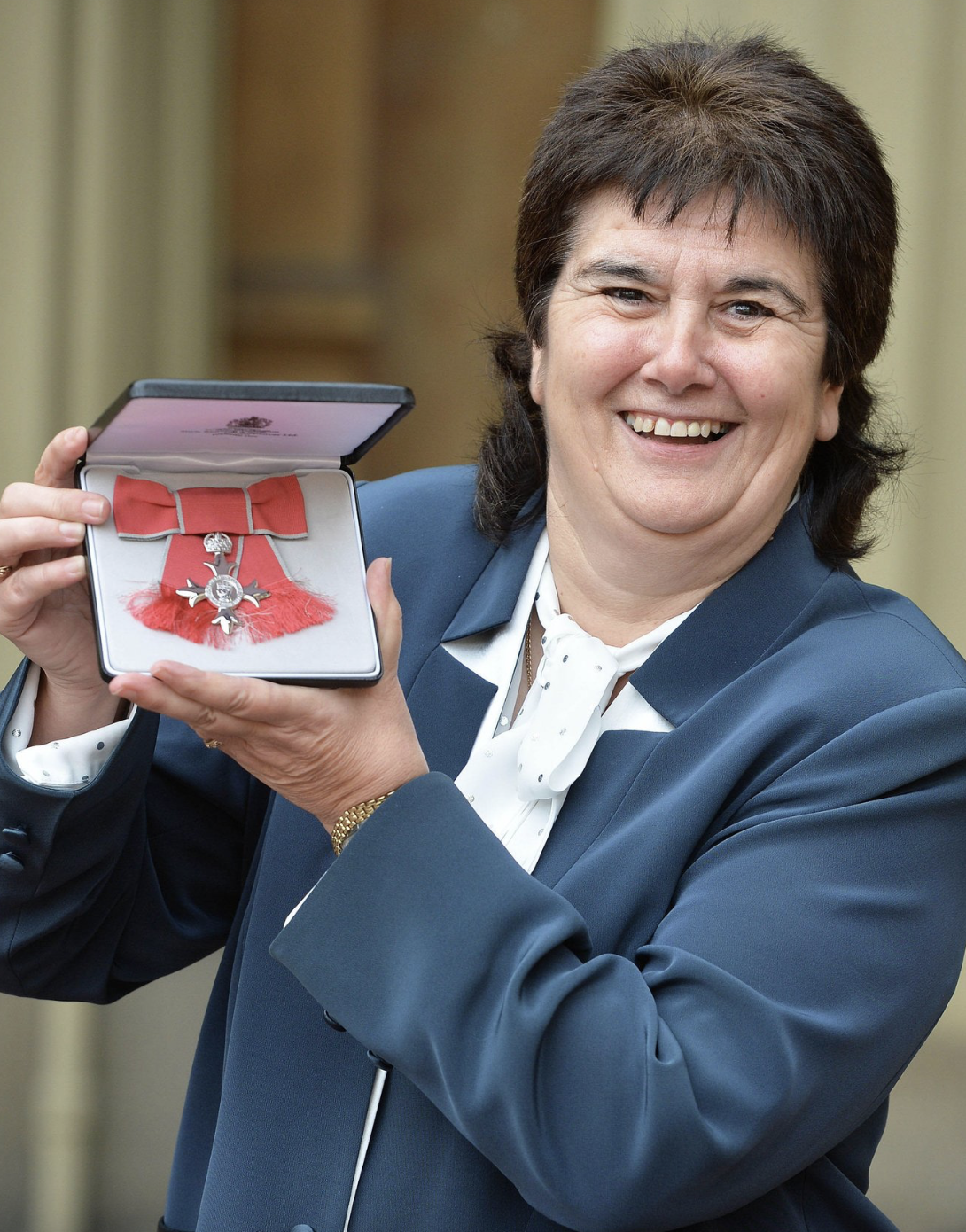
Some people leave a mark on football through trophies. Others through moments of brilliance on the pitch. Michele Adams MBE has done both, and more. For nearly fifty years, she has been a player, captain, coach, manager, and chairwoman. But above all, she has been the guardian of Welsh women’s football, carrying it through decades when the game was ignored, underfunded, and at times actively suppressed.
FROM PLAYER TO PIONEER
Picture this: it’s 1973. Adams is just fifteen years old when she pulls on a Wales shirt for the very first time. Two years earlier, women had still been banned from Football League grounds in England. In Wales, the infrastructure was thinner still, no clear pathway, no formal recognition. Just a handful of teams and a lot of determination.
Most players would have walked away. Adams didn’t. She kept playing.
By 1976, she had joined Llanedeyrn L.F.C., a team born from a local charity match that would eventually evolve into Cardiff City Ladies, and now Gwalia United. That decision would tie her story to the history of women’s football in Wales for the next fifty years.
And in 1993, Adams wore the armband as the first captain of the Wales women’s team under FAW management. That moment was bigger than football. It was a sign that years of playing in defiance of the system had finally led to recognition. Adams was one of the rare players who bridged both worlds, the rebel years, and the years when women’s football began to find its place.
FIGHTING FOR RECOGNITION
The turning point came in 1992. Adams, Karen Jones, and Laura McAllister, three former internationals, walked into a meeting with FAW general secretary Alun Evans. Their request was simple: take women’s football seriously.
It was the kind of ask that sounded obvious but wasn’t. For decades, the FA of Wales had kept women’s football at arm’s length. These women weren’t lobbying, they were demanding that the governing body rewrite the rules.
And against the odds, it worked. That meeting sparked the creation of an official Wales women’s national team. Finally, Welsh girls would grow up with a pathway to international football.
It was, in every sense, a watershed moment. For today’s internationals, Jess Fishlock, Natasha Harding, Sophie Ingle, that door was already open. But it was Adams and her teammates who kicked it down.
A MANAGER WHO BUILT DYNASTIES
Adams didn’t stop when her playing days ended. She simply moved to the touchline, and kept winning.
As manager of Cardiff City Ladies, she created something close to a dynasty: 12 Welsh Cup titles, countless promotions, and not one but two climbs into the topflight of women’s football in England.
Think about that. A Welsh club, run mostly by volunteers, standing shoulder to shoulder with Arsenal, Chelsea, Everton. Clubs with budgets Cardiff could only dream of. Yet Adams’s team held their own. For years, they weren’t just surviving, they were competing with the best.
And her influence didn’t end with silverware. For over a decade, she coached the Wales Under-19s, helping shape the players who would carry the national team into a new era. Jess Fishlock. Natasha Harding. Sophie Ingle. The backbone of modern Welsh football passed through her hands.
Adams herself was clear about what that meant:
“Seeing the youngsters you’ve helped coach reach the dizzy heights along the way is excellent… to know you’ve been part of their success story is great.”
It wasn’t always about the trophies, It was about building the future.
A PARTNER IN LEGACY
But Adams never carried the weight alone. Her story is tied to another, Karen Jones.
The two first crossed paths in the 1970s, when Jones was a teenage goalkeeper and Adams a rising midfield player. They became teammates, then co-leaders, then the twin anchors of a club that refused to disappear.
Jones remembers Adams’ arrival with clarity:
“Michele joined in 1976… she was a midfield player. After she retired from playing she became head coach, with massive success, taking our club into what was then the National League amongst the giants of Chelsea, Arsenal, Everton. We both played for Wales for many years, and Michele also captained her country.”
Two women, shoulder to shoulder for half a century. Fighting through rebrands, financial struggles, and near-collapse. Protecting the flame of Welsh women’s football when it would have been easier to let it go out.
Their partnership is a legacy in itself, one that has kept the door open for generations who came after.
THE GUARDIAN OF THE GAME
Across more than 40 years of service, Adams has earned 28 caps, coached multiple national teams, lifted countless trophies, and seen her players rise to the very top of the game. Yet her greatest achievement may be that Welsh women’s football exists as it does at all.
When today’s Wales line up in competitive internationals, when girls across the country dream of becoming the next Fishlock or Ingle, it is because pioneers like Adams never gave up.
She has seen the game go from fringe to mainstream, from suspicion to celebration. And she has been there at every step, playing, coaching, leading, protecting.
If Gwalia United are the bridge between past and future, Adams is the architect who built it.