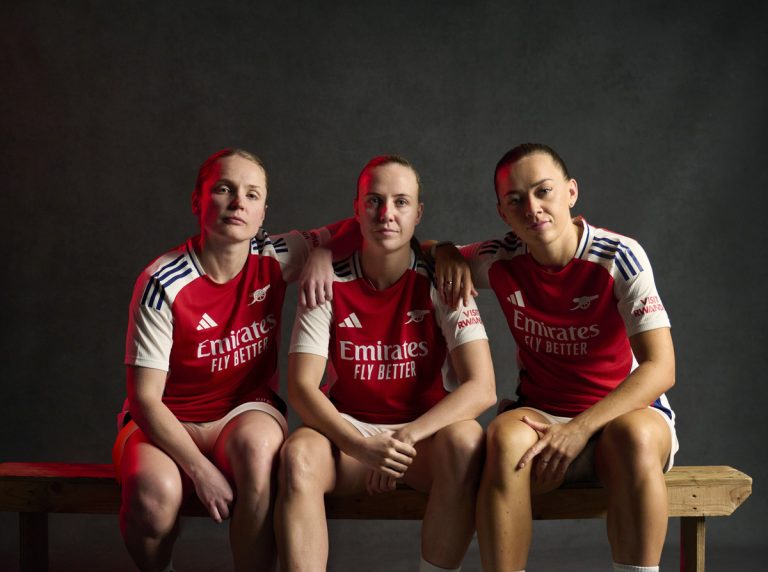
Growing up I loved football, however as a result of bullying and struggling to fit in I had to hide my passion. My experience of bullying is something that I don’t usually talk about, however it is a part of my journey that has led me to the person I am now. I struggled with my confidence massively and often adapted myself to what everyone else liked, unfortunately pushing my passions and aspirations aside. That was until I witnessed the Women’s Euros 2022.
Watching the Lionesses soar through the European Championship, leading to them to lift the trophy at Wembley, immediately recaptured that love. Someone who had lost their love for playing such a male dominated sport, was watching an extremely powerful group of women, out stand the barriers, stereotypes and stigma that are placed upon females within the sports industry.
I now look back and realise the impact of that summer – the summer of 2022, that changed mine and so many people’s lives. That summer truly inspired me to not hold back my love for football and is the reason I am the person I am today.
On my last day appearing as a Year 11 at an awards ceremony, I handed my head teacher a letter that covered my strong view for the need of equal access, opportunities and inclusion of football and sports for girls within our school. The topics I included overlooked the need for a secure and well constructed girls football club, support and encouragement from staff, as well as promotion of the female role models within sport that are challenging and breaking barriers to create a better place for girls to grow up in sport, because if they can see it, they can be it. Ever since that day, I have worked alongside him to do everything I can to provide that access and inclusion that I never had.
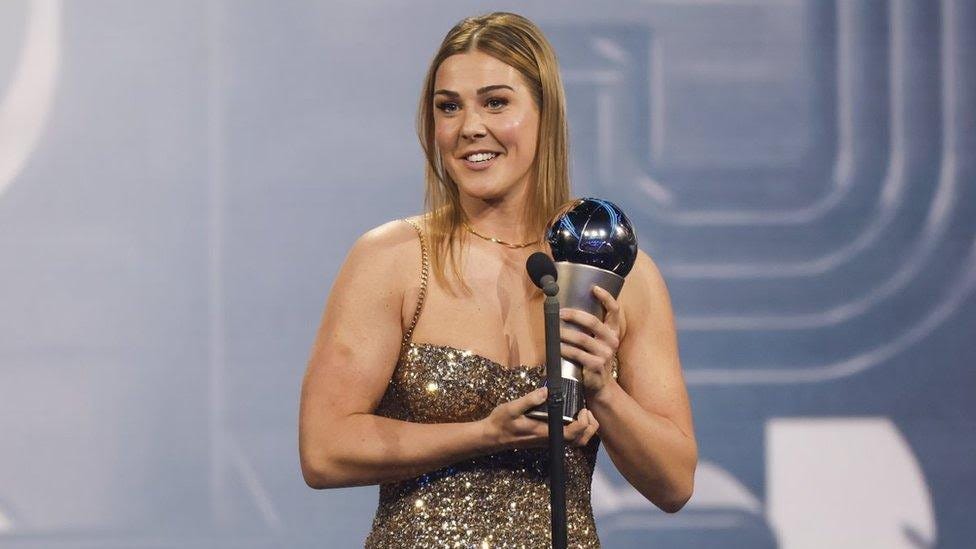
Over the summer after my GCSEs, Mary Earps spoke within an article, sharing her emotion on the fact that Nike had refused to sell her goalkeeper shirt. This caught my attention as Earps has and continues to inspire me every day, so for her shirt not to be sold alongside the outfield players was truly upsetting to see. I decided to act, creating a petition in support of Earps and all female goalkeepers across the world, showing Nike the true importance of all female goalkeepers. The petition reached an incredible 172,240 signatures and Nike agreed to sell them. Being able to take part in multiple interviews on both TV and radio with the aim of achieving this meant the world as it enabled me to show a massive role model within my life the true impact she has had on a population of people. When they were placed on sale, they sold out in minutes; demonstrating the demand that was there all along. I was able to meet Mary after an England match where she signed a shirt for me. Within her message she wrote: “Never stop using your voice!”
Everyday I remind myself of that. To always use my voice and to stand up for what I believe in.
Over the past two years, I have promoted women’s sport seeing first hand young girls finding their love with the confidence to excel despite what others say or think. Working closely with my local football club and Premier League Kicks, the girls football club runs every week with the girls receiving amazing coaching from brilliant coaches, as well as extra support from me and the staff member that runs it on behalf of the school. This is not only a place where they are able to learn new skills but also a place for them to enjoy the sport and make friends in a safe environment. Recently, I presented part of an assembly to raise awareness; this was an important thing to me as I was able to speak to them in person for them to see someone like them breaking the barriers that might hold them back.
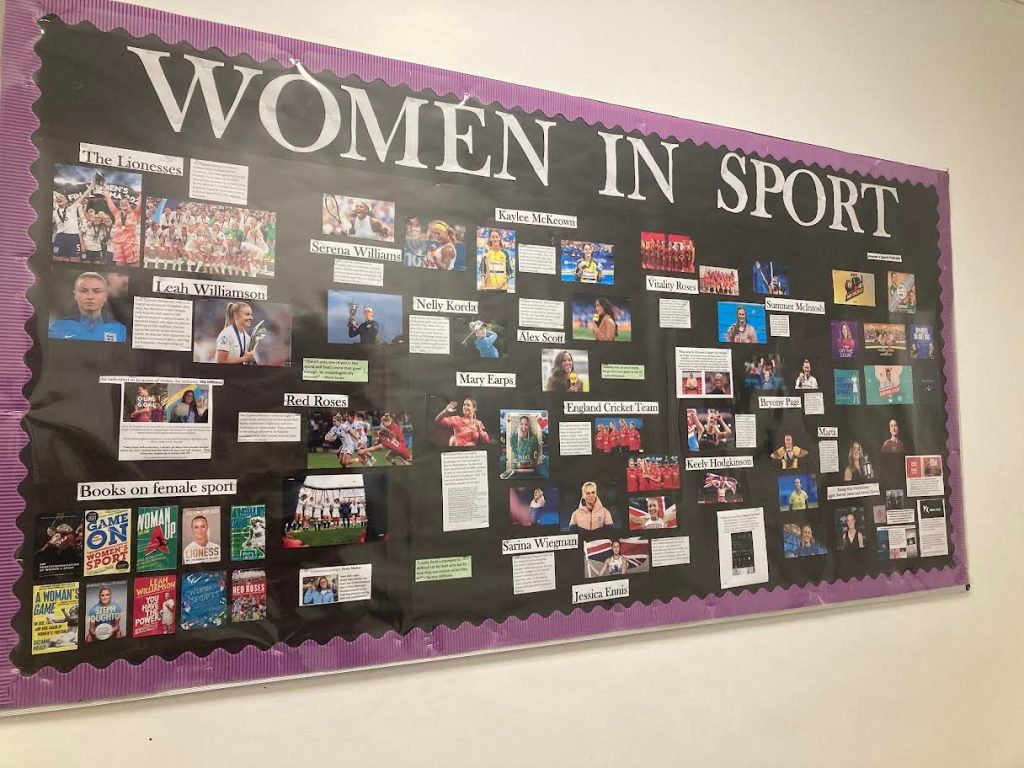
In the PE department, I have put up a display board titled ‘Women In Sport’. It covers some of the most inspiring females that are championing change for female sports. For example, Ella Williams. Williams appeared on the Beyond The Pitch podcast where we specifically discussed the factors that influence the disengagement of young girls in sport, something I resonate with very much. Williams has inspired me to continue to stand up for what I believe in, she is an amazing role model and her work as the founder of Our Goal is something I look up to massively. When speaking to Williams she explored this important point:
“I just think that role models is everything…What we have seen with the lionesses since they have won the Euros in 2022, is an enormous surge in popularity. Girls just seeing that one this is possible but two this is cool.”
“So having female role models that can go into school is just, you can change someone’s perception like that…You can’t underestimate role models.”
My time at school is coming to an end very soon. As I am in Year 13, I have 8 months left before I move onto the next part of my journey. I want to make sure that when I leave that everything is in place for the legacy of girls football to continue, without them having to worry about the barriers that cause disengagement.
I have noticed that a large majority of the girls attending the football club do not have or are unable to buy the necessary items such as boots or training kit.
This is where I need your help!
I want to put a pack together for each girl that includes everything they need to play football free of any worries or barriers.
Each pack would include:
- Football boots
- Training kit
- Water bottle
- Headband
- Deodorant/perfume
- A bag to keep it all together
If there are any sports brands that would be interested in making this happen then please reach out to me as it would mean the world to me to be able to make this happen for the young girls in my school before I leave.
If anyone has any contacts, ideas or advice that can help me, I would really appreciate it.
If you can help, reach out to my instagram:
https://www.instagram.com/emmyslifewithfootball
In appreciation to Mary and all female footballers that have inspired me, I want to do all I can to make sure that girls can grow up without the barriers that took away my love for the sport.
Photo: