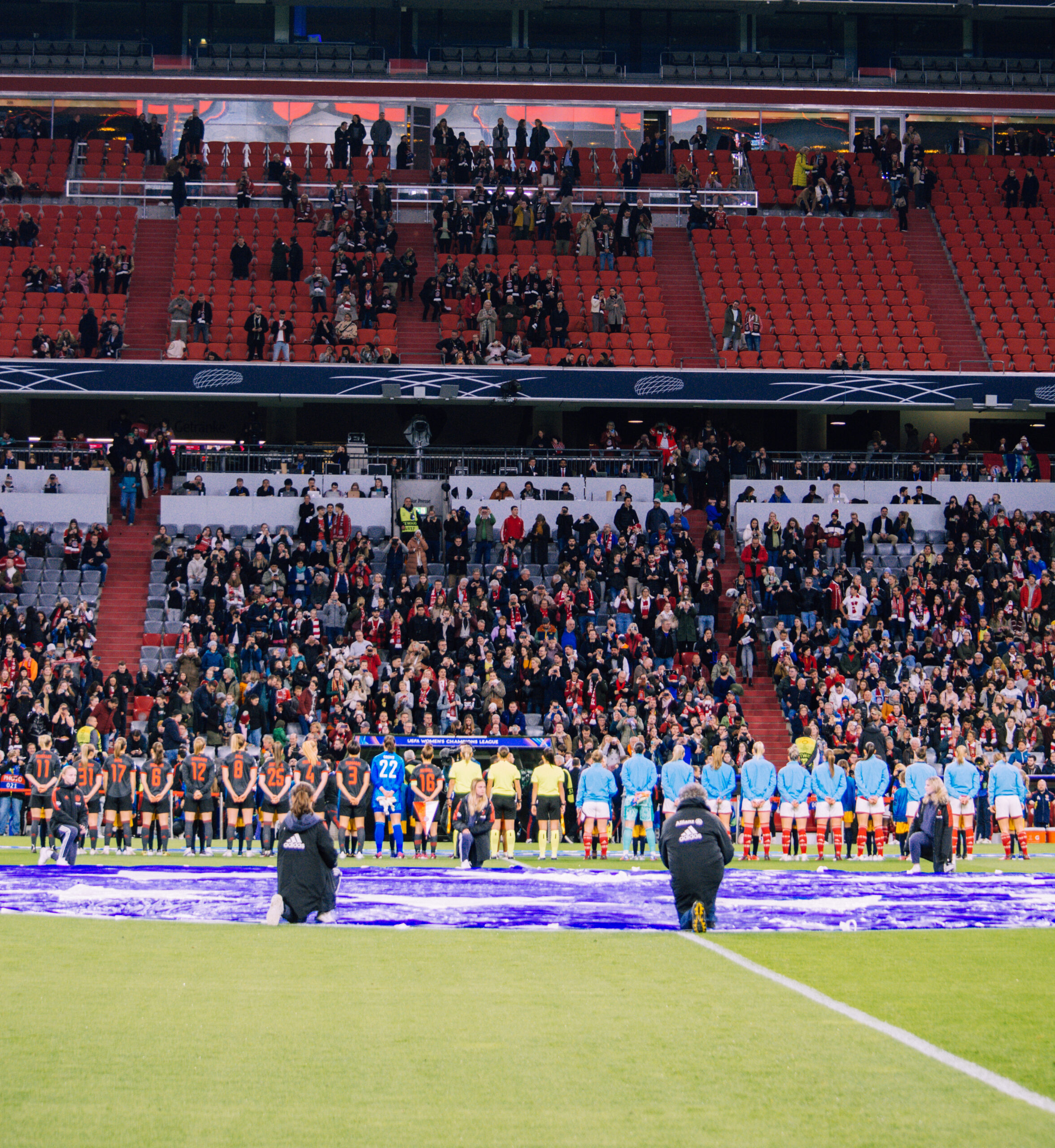
The popularity of women’s football across the past few years has skyrocketed – with social media to thank for part of this growth. Where coverage for women’s sports was previously an afterthought, social media platforms break down traditional barriers of the game’s visibility, fostering an environment that mainstream media often overlooks. But with many female sporting leagues also leveraging social media for growth, are there lessons footballing leagues can learn to enhance their engagement?
THE ONLY WAY FOR WOMEN’S FOOTBALL IS UP
There is no doubt that social media was a catalyst in attracting a new audience to women’s football. A recent visibility report by the Women’s Sport Trust found record breaking engagement across various women’s sports. On TikTok, UEFA for women’s football was the top performing property, amassing almost 490 million views in the past year. The NWSL was also the third leading league in terms of viewership on the platform. While these statistics are a big indicator of growing visibility for women’s football, other leagues like the WNBA almost doubled this viewership on Instagram and was second to UEFA on TikTok.
When discussing how women’s football can expand its reach like other sports, social media platforms often become the focus for growth strategies. Digital media undoubtedly attracts audiences by providing a space where sports can foster personal connections. It serves as a bridge, enabling potential supporters to discover and engage with the sport on a deeper level. The question is posed on how exactly social media facilitates this connection.
WHAT ARE OTHER SPORTS DOING ON SOCIAL MEDIA PLATFORMS?
Outside of the footballing world, let’s take the WNBA’s media strategies. As a viewer of both sports, the social media space of the WNBA functions in a unique way compared to women’s football. Women’s basketball tends to leverage individual players on platforms and focus on a storytelling aspect of a certain player or a team’s seasons. As an example, the league’s current superstars, Caitlin Clark and Angel Reese – often portrayed as rivals in the media – frequently dominate headlines of social media posts.
Paige Bueckers, a recent addition to the WNBA, was also a prominent figure throughout the latest season. After an outstanding record-breaking college career and being selected as the number one overall draft pick, social media headlines frequently speculated on how Bueckers would continue to establish herself as a breakout star in the professional league.
As a result, these stories shared across digital platforms engage supporters by making them also feel part of a historic narrative. Women’s football could similarly benefit by crafting compelling narratives that evoke this emotion, encouraging viewers to see it unfold in real time. It’s stories like Chloe Kelly, a player who wanted to step back from football entirely, to winning the UWCL or discussions on young, break-out stars that could be widely spoken about on these platforms.
ATHLETES ARE PART OF THE AMPLIFICATION
Athletes’ own social footprints are also responsible for boosting their sport’s visibility. Players can double as content creators, driving engagement as a result.
Take Suni Lee, an olympic gold medallist for team USA who often collaborates with popular content creators while uploading daily lifestyle content on TikTok. Ilona Maher, an American rugby union player and Olympian, is another sportswoman frequently active on TikTok with over 3 million followers. These athletes alone have played a pivotal role in cultivating widespread interest in their sport. Where mainstream media was not a frequent reporter on either sport, athletes took control of their own representation by directly engaging with audiences.
This isn’t to say all female footballers should become influencers on social media, but footballers who might play in less represented leagues could fuel their club’s representation where media ordinarily wouldn’t. This could attract many new fans, specifically those that are younger, that could find interest in another outlet of women’s sports.
SOCIAL MEDIA PROVIDES ACCESSIBILITY TO WOMEN’S SPORT
Consideration should be given to whether there are opportunities for supporters to connect with or discover a sport that they might not have encountered otherwise – is women’s football actually accessible for new fans?
With many leagues and competitions in women’s football being shared across many streaming services and outlets, the ‘paywalling’ of services can add barriers for people discovering the sport or leagues. Hence, why social media serves as this forementioned bridge to bring newer fans to the sport. It’s important for social media pages to constantly bring attention to what is occurring around women’s football. Score lines, injury updates and transfers should continue to be frequently present on platforms for new supporters who may not have kept up with every game, to stay involved with the season.
Interestingly, beginning in the 2021/22 season, Burnley women’s football club featured a unique strategy where every home game would be live streamed on TikTok. It was an innovative decision that embraced an online audience and further highlights the value of drawing viewership from social media platforms.
The rapid rise of women’s football is undeniable. By learning from other sports, football leagues can utilise storytelling, player-driven content, and digital engagement to build deeper connections with fans and expand their reach. Embracing social media as a connection to new audiences, especially where mainstream media falls short, is essential in growing the women’s game.
Female Viewership Grows as Women’s Sport Breaks New Records Across Broadcast and Digital
https://www.sportsbusinessjournal.com/Daily/Issues/2021/07/30/Olympics/Suni-Lee/ https://www.operative.com/resources/the-rise-of-
the-wnba/ https://newsroom.tiktok.com/burnely-women-one-million-views-lives?lang=en-GB
https://www.forbes.com/sites/lindseyedarvin/2023/10/31/media-coverage-for-womens-sports-has-nearly-tripled-in-five-years-according-to-new-research/