Germany appears to be actively trying to build on and shape the future of women’s football in the country, with December seeing two major announcements that point towards significant investment and long-term development of the women’s game.
After the UEFA Executive Committee convened to select the next nation to host the 2029 UEFA Women’s Euros, it was Germany that came out on top, beating out bids from Poland and a joint submission from Denmark and Sweden. Portugal and Italy had also previously submitted bids, but later withdrew them to focus on alternative campaigns for the men’s 2032 Euros and men’s 2030 World Cup.
UEFA President Aleksander Čeferin stated:
“Each bid showcased vision and exceptional teamwork and I am sad we had to choose only one.”
He thanked the three bid delegations and added that he looks forward to an:
“Unforgettable tournament in the summer of 2029.”
The tournament will be spread across Germany, in eight venues – Cologne, Dortmund, Düsseldorf, Frankfurt, Hanover, Leipzig, Munich, and Wolfsburg – and will be the nation’s third time hosting the competition. They previously hosted in 1989 as West Germany and again in 2001.
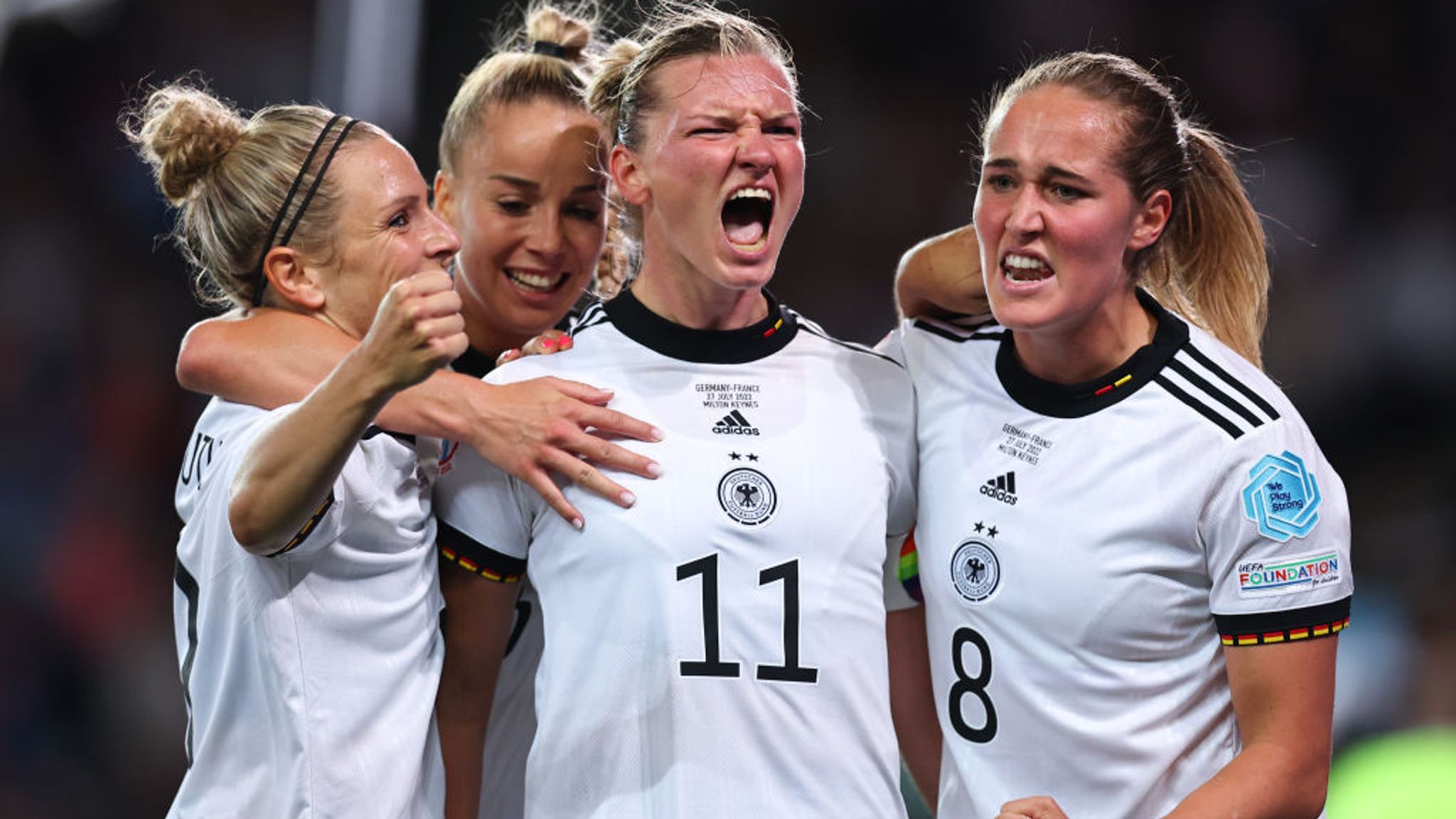
The German national team are widely regarded as a force to be reckoned with in women’s football, and were victorious the last two times they played host to the international tournament. After falling short this year, it is expected that the side will be looking to make a comeback and reclaim the European crown once more – particularly on home soil.
To add a little more pressure, following England’s success in retaining their Euros title, the Lionesses will no doubt be on the hunt for a historic triple victory. With Germany the only nation to have triumphed at more than two consecutive European Championships – winning six in a row between 1995 and 2013 – they will surely be eager to fend off any nation nipping at their heels.
Announced around the same time was the news that the 14 clubs competing in the Women’s Bundesliga have officially established their own league organisation, the Frauen-Bundesliga FBL e.V. The unification of these elite-level teams is expected to help drive women’s football in Germany to new heights, with a focus on sustainable development, increased professionalism, and support for the game’s future.
A three-member executive committee has been elected, with Eintracht Frankfurt’s Katharina Kiel named president. Veronica Sass (Bayern Munich) and Florian Zeutschler (SGS Essen) have been elected as vice presidents, and the association is set to be rolled out in the next 18 months.
FBL head Katharina Kiel described the creation of the organisation as a:
“Historic moment for German women’s football. For the first time, all top-division clubs are joining forces and pooling their interests within a league association.”
Kiel added:
“For us, this represents a provisional high point in a process that we, as clubs, began together approximately 18 months ago.”
The news has not come without controversy, however, as the clubs made a last-minute decision to move forward without the DFB (German Football Association), signalling a potential rift between the two parties. The original plan had been for the association to be formed alongside the DFB.
Addressing this, Kiel pointed to the DFL (German Football League), which oversees and markets the men’s Bundesliga, having initially been established without the DFB. Kiel said:
“Every path has its advantages and disadvantages. Today, the focus is on founding the association. The idea of working with the DFB has not been abandoned. Our task remains to take the next steps with an open mind.”
The common feeling across all parties, however, is that immediate and concrete investment in women’s football is required if Germany is to ensure its domestic leagues and national teams can keep up and remain competitive with other leading nations such as England and the United States.
With a major international women’s tournament set to come to the country in just under four years, alongside the recent establishment of the Frauen-Bundesliga FBL e.V., we may be set to see rapid advancement in the women’s game in Germany, both domestically and internationally, in the years ahead.
Given that women’s football in Germany has been on an impressive upwards trajectory for quite some time, could they be the ones to knock England off their throne?