More research has sparked new conversations into the relationship between women and their susceptibility to suffering an ACL injury.
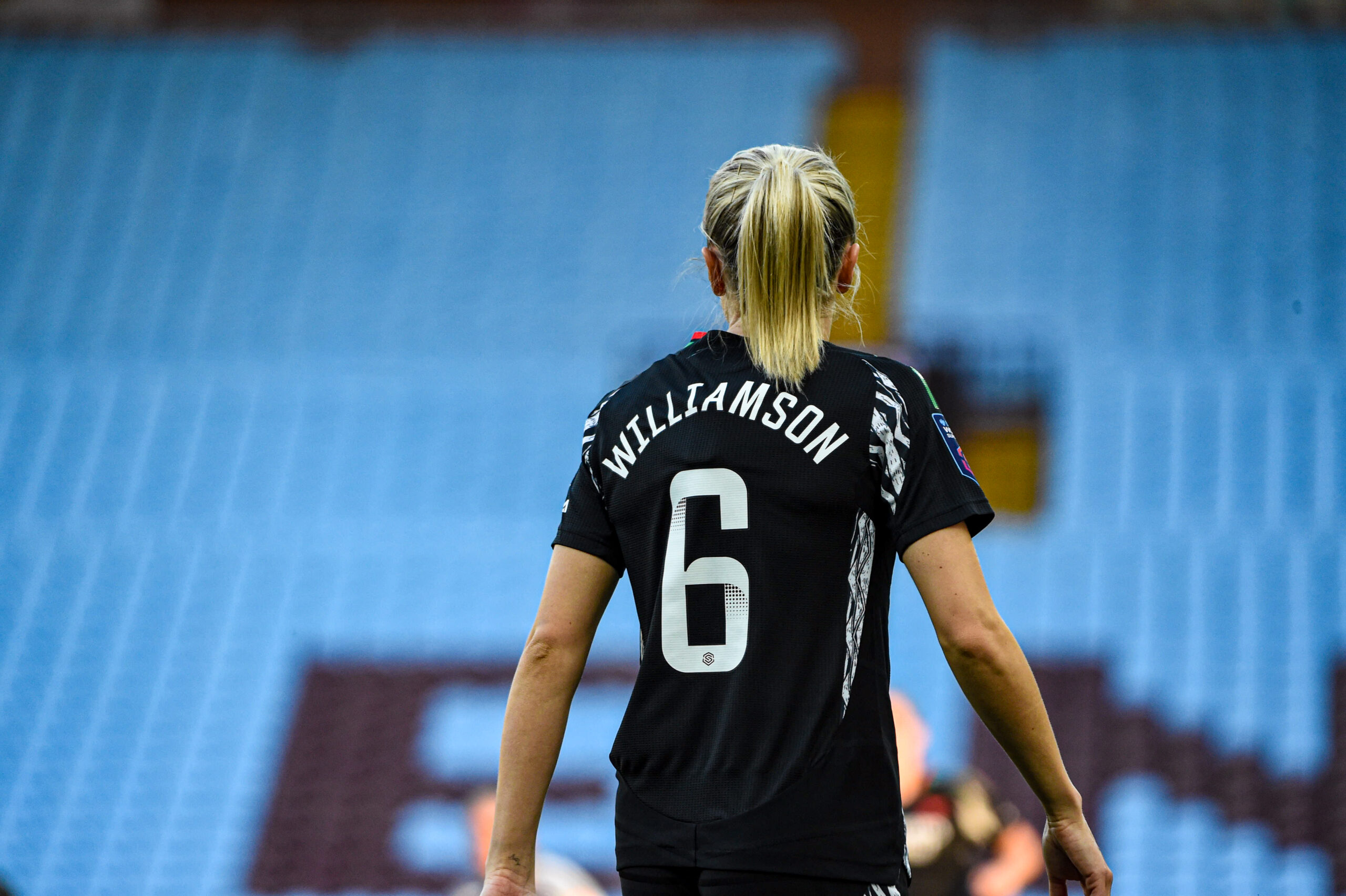
Leah Williamson, Beth Mead and Vivianne Miedema: What do these three professional football players have in common? Unfortunately, they’ve all suffered from an injury to their anterior cruciate ligament (ACL), which runs diagonally in the middle of the knee, during their professional football career.
It feels as though there’s a new story on the latest player having to go through months of rehabilitation every season. But why is this happening?
MEAD’S MESSAGE
According to Cymru Sport, over 500 women have suffered from ACL injuries since 2022. In January 2024 alone, 195 professional athletes suffered an ACL injury keeping them out of the game for 18 months or longer.
Research over the years suggests that women are two to six times more likely to suffer from an ACL injury in comparison to a male footballer. From anatomy, hormones and equipment, the discussions around finding an explanation behind the shocking statistics appear to be endless.
In an interview FIFPRO, Mead, who suffered an ACL injury in November 2022, said:
“There is so much research into the men’s side of the game but there is minimal research into the women’s game in comparison. This is why we’re here and trying to change that. Hopefully, we can push on with research and try to get more answers.”
Kingston University is helping address the issue with a year-long study funded by football’s world governing body, Fifa. The research is headed up by the PhD student Blake Rivers and the university’s sports science experts Dr Simon Augustus, Dr James Brouner and Dr Michelle Richards.
By analysing hormone concentrations from blood samples collected from 20 to 25 adult female players, aged between 18 and 35, the team will then examine how they perform specific movement tests at different stages of their individual menstrual cycles.
Augustus, who is a senior lecturer in sport biomechanics at the university explained:
“We want to examine whether athletes may be more predisposed to injuries because of the functional changes in terms of their anatomy and physiology during the menstrual cycle.”
“We know hormones fluctuate during different phases of the cycle but we don’t yet know how much of an influence that may have on the risk of injury.”
PROJECT ACL
In April 2024, Project ACL launched as a collaborative effort between FIFPRO, Nike, and Leeds Beckett University as a three-year plan to accelerate research between clubs.
After its first year of research, the project published its overview in April 2025. So far, it has seen all 12 Women’s Super League (WSL) clubs complete a questionnaire focused on best practice in injury risk-reduction, obtaining perceptions of the conditions at club level and return to play strategies.
The project has also reiterated a knowledge gap in ACL injury risk-reduction in professional women footballers, illustrating the need for further collaboration between scientists, clubs and players. The project will next involve interviews with WSL clubs and the players, “whose voice is central to the initiative,” explains FIFPRO.
This knowledge gap has also been highlighted by a collaboration between Subway, the WSL and The Well HQ. So far, the programme has found that 80% of players admitted to having low knowledge of the impact nutrition can have on their menstrual cycle, as 20% reported their menstrual cycle stopped altogether – indicating nutritional issues.
Underfueling was found to impact performance, recovery times, bone mineral density and menstrual cycles for women in sport. Maz Pacheco, Everton defender, has been announced as a player advocate. Within her role, she acts as a representative for players across the WSL and WSL2 for any queries or concerns they may have.
This recent research highlights just how important it is to understand women’s health. At the FIFA Women’s Football Convention in 2023, Dr Georgie Bruinvels was bringing attention to this issue. Whilst three years has passed, her words still need actioning:
“From my perspective, really focusing on developing education around female health should be the underpinning factor with appropriate and accessible resources. We need to think more about building the infrastructure around the game for female athletes to reduce the risk of injuries across the board alongside doing research internally, and to keep saying: Well, what do we need to do to better support females?”
RISKS IN MENSTRUATION
Studies, such as one undertaken by the American Journal of Sports Medicine, found that the relationship between injury and the menstrual cycle comes down to a woman’s hormonal shifts. As estrogen rises around ovulation, it can increase ACL injury risk due to lax ligaments and potentially affecting neuromuscular control.
After analysing 40 female athletes, the research found that there were more injuries than expected in the ovulatory phase of the cycle.
Whether it’s a woman’s hormones, their anatomy or the use of cheap equipment, more players are getting injured. From Arsenal’s (currently on loan to Brighton & Hove Albion) forward Michelle Agyemang, who sustained an injury to her ACL in October 2025, to forward Katie Reid, another player at Arsenal who will also be out for the remaining 2025/26 season; numbers will not stop increasing until there is an answer.
The conversation continues as questions into women’s health multiply affirming the importance of research.