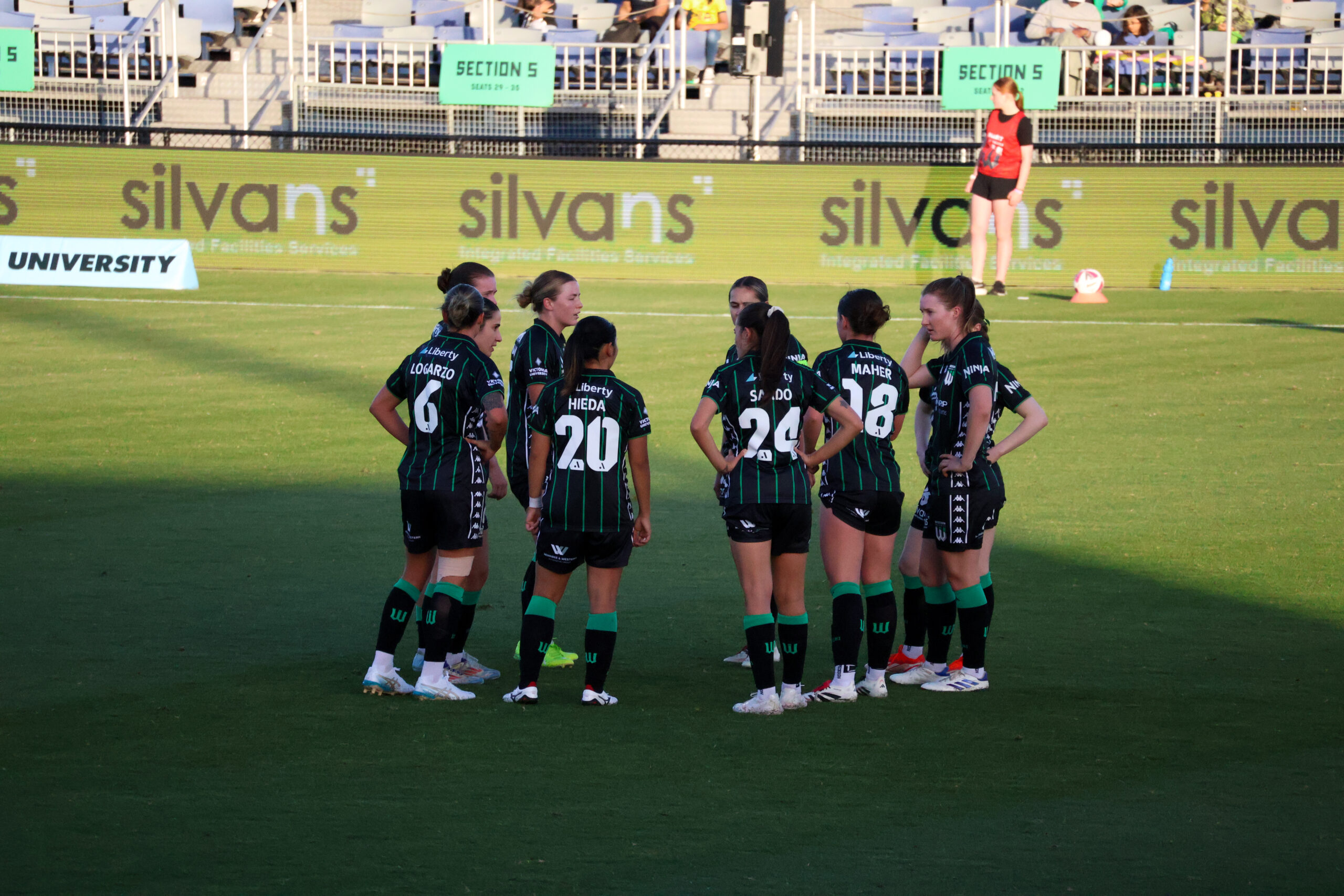
On January 14, 2026, the Professional Footballers Australia (PFA) launched a significant new vision which looks to secure the future of Australia and New Zealand’s premier domestic football competition, the A-League Women (ALW). 21 recommendations have been presented, each of which fall under one of four overarching pillars, as full professionalism looks to finally be achieved in the league.
FIT FOR PURPOSE GOVERNANCE
The first pillar covers a primary concern that notably has the most impact and influence on what the future of the ALW could look like. Since 2020, the A-Leagues have been governed by the Australian Professional Leagues (APL), following the league’s separation from Football Australia (FA). Since APL took control, both the men’s and women’s competitions have suffered from an inadequate governance model which has resulted in significant ramifications, particularly surrounding the development of women’s football. The current governing board hosts a significantly male-centric composition, which consequently has led to women’s football not receiving appropriate focus. With this, the PFA hopes for the control of the A-Leagues to be transferred to an independent commission which is able to reflect on a 40:40:20 gender principle (40% men, 40% women and 20% any gender), with boards required to hold suitable gender representation and experience in women’s sports.
EFFECTIVE FAN ENGAGEMENT
When considering what makes football so successful on a global level, fan engagement is always marked as a top priority. Following an unprecedented level of market research, a range of fan-specific proposals have been made. The PFA found an absence of visibility and communication between fans and the game, leading to significant barriers towards viewership. This has led to many die-hard women’s football fans shifting focus to higher-developed leagues, a majority of whom have already demonstrated the capacity to invest in the women’s game.
The ultimate goal for the ALW is for full professionalism to be implemented by the 2026/27 season, which looks to present a fulfilled product to fans, demonstrating the importance of women’s sports, particularly following the AFC Women’s Asian Cup being held in Australia in March. Alongside this comes commitments to improved broadcasting quality, league and club brand identities and expanded connections with grassroots initiatives.
REFORMED FOOTBALL ECONOMY
It was recently revealed that the ALW is the lowest paying top-tier league amongst major women’s sporting competitions in Australia, which has sparked major concern amongst fans and players alike. This has resulted in poor player retention, with many either searching for opportunities overseas or dropping out of the sport completely. The PFA looks to flip the script, following world-leading women’s leagues including the WSL and NWSL, through full professionalism and increased grasp on the potential of fan revenue.
SUITABLE MATCHDAY STRUCTURE
The fourth and final pillar surrounds the presentation of the ALW during matchdays, ensuring an elite and global standard product. To achieve this, clubs will need to look at acquiring and securing strong home venues that have the capacity to cater to the ever-growing women’s football fanbase. Additionally, all amenities will be required to meet minimum standards for the women’s game, with a strong consideration of the fact that the ALW is played through the summer, compared to the winter scheduling of other major leagues globally. The PFA looks for matchdays in the ALW to meet, if not exceed, the standard that has been set internationally, as the ALW looks to grow into an elite national competition.
You can read the full report here