The Caribbean region has produced some standout names in women’s football, including Khadija “Bunny” Shaw of Jamaica, Tasha St. Louis of Trinidad and Tobago, and Melchie Dumornay of Haiti, among others. These players began their playing journeys on modest pitches in the Caribbean and then went on to compete at the highest levels across Europe, the USA, and beyond.
It’s a familiar story in the Caribbean, where players tend to leave the warm shores behind to pursue better playing opportunities abroad. For many young girls, this means migrating at a young age or seeking university scholarships abroad due to the scarcity of competitive domestic leagues and a lack of year-round fixtures at home.
Despite this, Caribbean women’s football is marked by passion, resilience, and undeniable talent. Across the islands, players, coaches, and administrators continue to push the game forward despite the challenges of irregular leagues and teams. Recognising this challenge, clubs and federations have begun to focus on creating more playing opportunities to nurture emerging talent and encourage talent discovery. The creation of the regional tournaments has helped to not only fill calendar gaps but to build the momentum needed to drive women’s football forward and allow players to reach the next level.
THE CHALLENGE
While some islands have invested in women’s leagues, these competitions still face significant hurdles regarding funding, scheduling, and club participation. For example, the 2024/25 season of the Trinidad and Tobago Women’s Football League (WoLF) was originally expected to launch in September 2024, but was later postponed. Amidst rumours that the season was cancelled completely, the WoLF executive stated that the organisation was targeting a new league start date between the end of November 2024 and January 2025 to allow clubs to satisfy Concacaf compliance standards and avoid clashes with the secondary schools league.
The league eventually kicked off in January 2025, under a revised format. During the competition, it was clear that some clubs were more organised, with wider squads and resources, while others struggled to meet basic operational standards, and this definitely showed in match results. Meanwhile, in Barbados, the women’s football programme had been dormant for years, prompting the unofficial women’s national team Instagram page to stage a social media blackout and online protest in May 2025. The Ladytridents page on May 22nd 2025, posted that it had been 533 days since the Barbados WNT had been active, calling for the revival of the national team and domestic league.
Without regular club competition and, in some countries, the absence of consistent national team training, female players can go months without meaningful matches and structured training. This lack of consistent football undermines player development, match fitness, and readiness for international tournaments. Most crucially, it affects morale among players who are talented, driven, and eager to play the sport they love. In speaking with the moderator of the Ladytridents page, it was confirmed that some players had left the sport during the 533-day hiatus.
CREATING OPPORTUNITIES
Across the Caribbean, there have been several initiatives to address the gap left by inconsistent domestic leagues. These initiatives offer competitive platforms for women and girls to play, develop their skills, and be seen. These tournaments are lifelines, organised by clubs, federations, and unions, to sustain the women’s game.
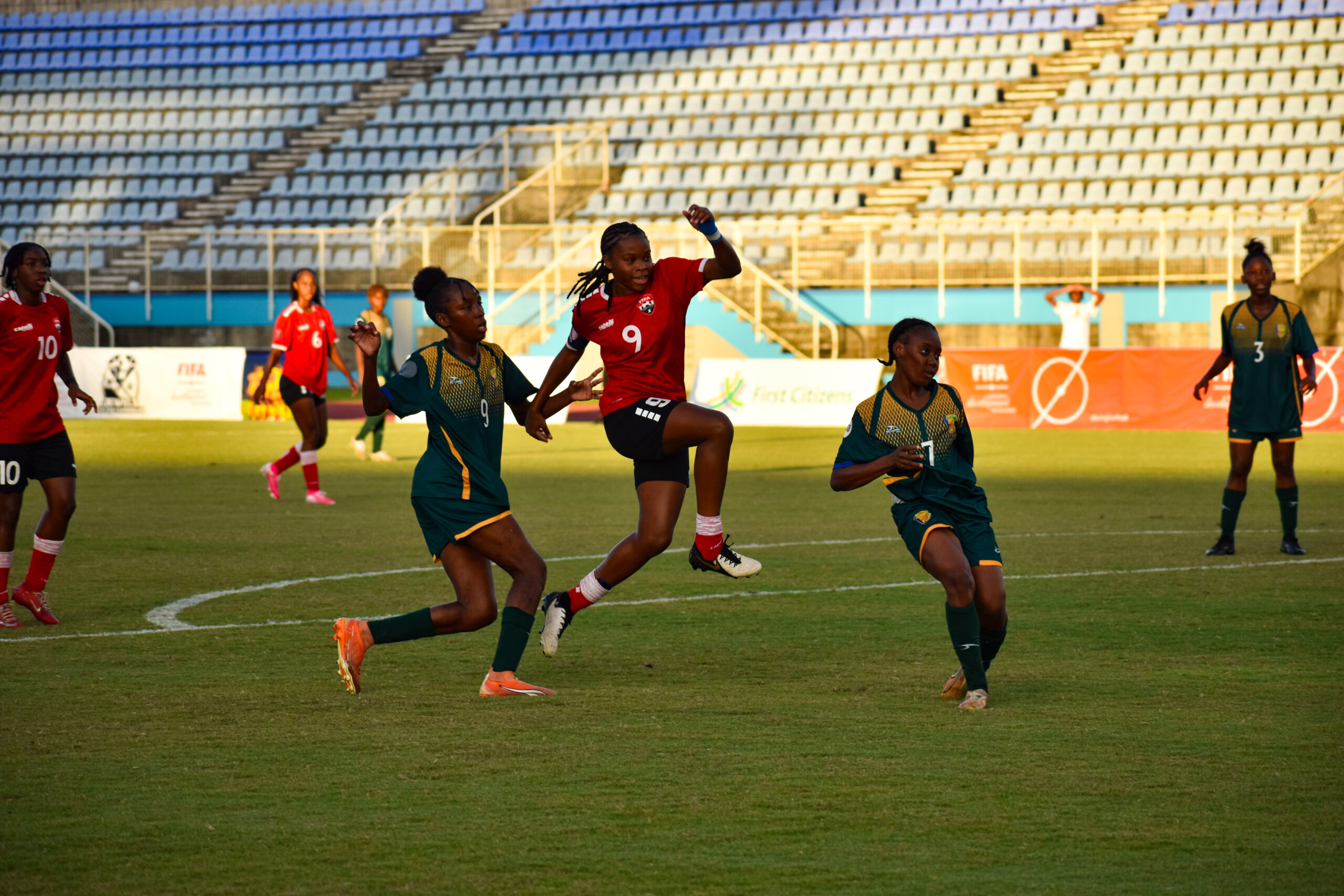
The Trinidad and Tobago Football Association (TTFA) held its fourth edition of the Jewels of the Caribbean Women’s Tournament in December 2024 for the U20 division. This regional tournament featured teams from Dominica, Jamaica, St Vincent and the Grenadines, and two Trinidad and Tobago teams. Trinidad and Tobago used this tournament to assist in team selection of their 2025 CONCACAF U-20 Women’s Championship qualifiers squad. This event gave young players valuable match practice and a competitive environment that was otherwise missing from the domestic schedule.
At the youth level, the Caribbean Football Union (CFU) Girls’ U-14 Challenge Series which was hosted in Trinidad and Tobago from 15th to the 24th August 2025 showcased how regional cooperation can open doors for younger age groups. Twenty-three member associations took part, divided across two tiers, with nearly 500 players participating. Once again, Trinidad and Tobago was allowed to field two teams, the National U-14s and a High-Performance side, after Haiti withdrew before the start of the tournament. This ensured that every match slot was used. CFU General Secretary Camara David described the tournament as a:
“Developmental competition that introduces the girls to international football.”
Davis also said that it would be the first taste of cross-border play for many of the participants.
Another standout initiative was the 3W Women’s Football Tournament hosted in Trinidad from 4th-10th August 2025. This regional invitational tournament is organised by a local club, the Trinidad and Tobago Defence Force. The event hosted six teams, The Trinidad and Tobago Defence Force, Guyana Defence Force, the Grenada National Women’s team, Club Sando, Tobago Chicas, and Pro Series U-20. The tournament offered competitive exposure for all teams.
Defence Force manager Flight Lieutenant Ryan Ottley explained:
“3W’s means opportunity. Opportunity for growth, for exposure, for development.”
The week-long competition, which saw the Defence Force lift the title, again demonstrated how partnerships between clubs and institutions can fill the gaps left in the domestic calendar.
Elsewhere, the Windward Islands Football Association (WIFA) Women’s Tournament returned after a six-year hiatus, taking place in St Vincent and the Grenadines from 14th-20th September 2025. Barbados, Dominica, St Lucia, and the hosts all featured, with Barbados emerging champions after a hard-fought 2-1 victory over St Lucia in the final. General Secretary of the St Vincent and the Grenadines Football Federation Peter Edwards stated that the tournament was held to prepare teams for upcoming CONCACAF tournaments, and to give teams more exposure to competition.
He expressed enthusiasm to welcome more teams to the competition in further iterations. Beyond football, the WIFA event incorporated seminars on women’s health, athlete empowerment, and leadership, underlining a holistic approach to sport. One such seminar entitled “Our Goal, Her Equal Rights” was facilitated by the United Nations who partnered with the WIFA Women’s Tournament. UN Resident Coordinator for Barbados and the Eastern Caribbean, Simon Springett, in a press release recognised the unique power of sport to promote fairness, respect, and equal opportunities.
These tournaments illustrate how various federations, organisations, and clubs can carve out much needed spaces for Caribbean women’s football to develop and thrive in the region. These opportunities provide more playing opportunities throughout the season, visibility opportunities, and community building experiences for stakeholders. Together, these are all key ingredients to building a more competitive and sustainable environment for the women’s game in the region, where players can thrive at home, instead of needing to seek development opportunities abroad.