On 16 August, the 2026 Women’s Africa Cup of Nations came to a close, with an exciting final between three-time runners-up Cameroon, and tournament debutants Malawi. The tournament was originally supposed to be held in March and April, yet was postponed only 12 days before kick-off due to “unforeseen circumstances”.
Despite the administrative upset, the tournament kicked off in Rabat, Casablanca, and Fes on 26 July, and delivered a tournament full off standout performances across the competition, and nail-biting, inspiring drama throughout.
Let’s take a look at which teams knocked it out of the park, which ones surprised us, and which ones will be looking to make a redeeming comeback in the future.
The Champions
It would be wrong not to start with the tournament champions. Cameroon’s Indomitable Lionesses claimed victory over Malawi in the final with a score of 3-0, and when you reflect on their entrance into the tournament, this makes their success even more thrilling/impressive.
Cameroon had initially failed to qualify for this year’s WAFCON, losing out to Algeria, but were offered a route back into the tournament when the Confederation of African Football (CAF) expanded the competition from 12 to 16 teams. The team were knocked out of the tournament in 2022, their earliest exit in 20 years, and had not reached a final in over ten years, since 2016. In the 20th minute of the final, Maria Ngah scored Cameroon’s first ever goal in a WAFCON final and netted another before the first half ended, with a strike by Naomi Ndjoah Eto in the 30th minute also solidifying the lead.
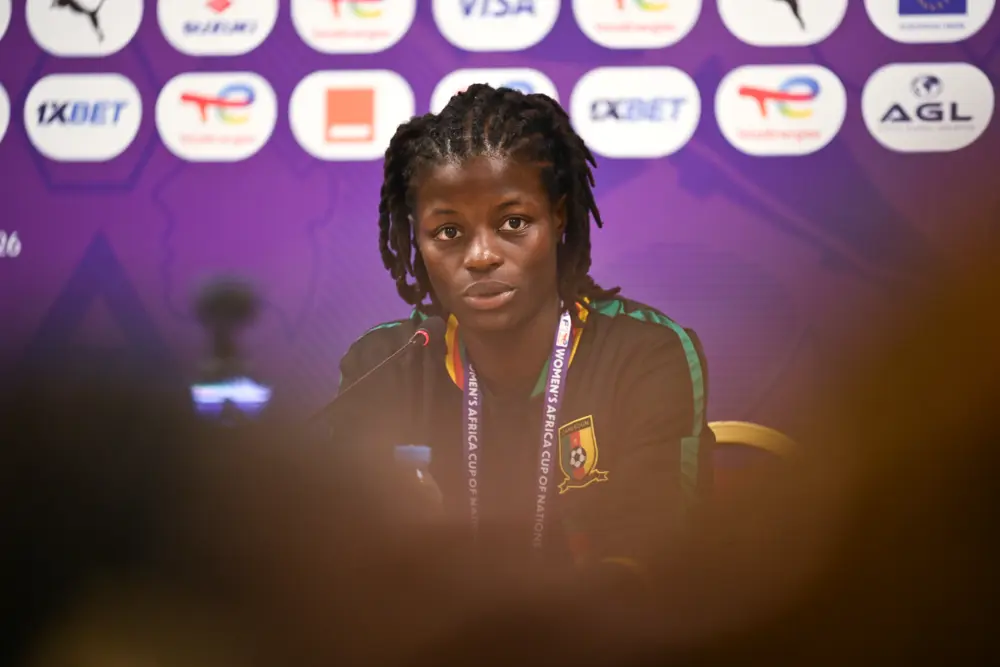
Former goalkeeper, Valentine Nguele, stepped in as Cameroon’s coach in June, becoming the first ever female coach for the national team. Under her watchful eye, Cameroon powered their way through the tournament, winning their group before knocking out ten-time champions Nigeria in the quarter-final and tournament hosts, Morocco, on penalties in the semi-final.
The Fairytale
Tournament debutants and the lowest-ranked team (153rd), Malawi surprised everyone by storming their way to the final against Cameroon. With the odds stacked against them, they pulled off what has been cited by some as “the most remarkable major tournament performance ever”. Now that’s a statement.
Simply qualifying for the tournament was seen as an achievement in itself, and many didn’t expect Malawi to even make it out of the group stage. Set to face teams such as Nigeria, Zambia, and Egypt – all teams with serious tournament experience – Malawi stunned everyone by opening with a 3-2 win over defending champions Nigeria, a 3-1 win over Egypt, and topping their group despite a tough 2-1 loss against Zambia.
Their 2-1 win against Ghana in the quarter-finals secured Malawi their first-ever Women’s World Cup qualification, and their victory over Algeria in the semis secured their place in the WAFCON final.
While the historic fairytale didn’t get the happiest ending, Malawi have made their mark – and will be one to watch at their first-ever Women’s World Cup next year.
The Scorchers did in fact set the tournament on fire, and they’ll forever be remembered.
The Hosts
Hosting for a third consecutive time, Morocco looked like they could bring it home. After topping their group without conceding a single goal, they went on to beat South Africa in the quarter-final, and it looked like things were set to go Morocco’s way. But Cameroon stood between the hosts and a place in the final.
The Indomitable Lionesses stopped the hosts’ journey to glory in its tracks with a goalless 90 minutes followed by a penalty shootout. In the third-place playoff, Morocco were defeated by Algeria, losing again on penalties and sending the hosts home in fourth place.
After three consecutive WAFCONs on home soil without lifting the trophy (2022, 2024, 2026), Morocco will be looking to switch up their strategy as other major tournaments inch closer.
The Missed Opportunities
From tournament favourites to reigning champions, there were a few teams who will be reflecting on their WAFCON 2026 performance with frustration and disappointment.
Nigeria arrived as defending champions and record ten-time winners – however this was their worst WAFCON performance yet. They opened with a shock 3-2 defeat to tournament debutants (and the lowest-ranked team) Malawi. After this stumble, they regained their confidence, beating Zambia 1-0 and Egypt 6-2. In the quarter-finals, they were finally knocked out by Cameroon. This marked the first time Nigeria had failed to make it to the semi-finals in 14 WAFCON appearances.
With the following World Cup playoff a shot for redemption and to qualify for the 2027 World Cup, Nigeria lost 2-1 to South Africa. This means the Super Falcons have not qualified for the World Cup for the first time in their history.
Following the defeat, the Nigerian Football Federation ordered head coach Justin Madugu and other members of his technical crew to step down.
The Second Chances
After South Africa beat Nigeria 2-1 and Ghana beat Côte d’Ivoire 2-1, the two nations secured Africa’s remaining spots in the intercontinental playoffs for the Women’s World Cup.
Against Nigeria, South Africa took the lead in the second half through Thembi Kgatlana, before captain Refiloe Jane doubled their advantage. Jane was then sent off for a second yellow in stoppage time, with Nigeria then pulling one back moments later. But South Africa held on, walking away victorious.
For Ghana, their defeat of Côte D’Ivoire was another comeback. After falling behind to an early penalty, Princess Marfo helped Ghana get level before Josephine Bonsu scored the winner from the penalty spot.
The wins for both of these teams means their World Cup dreams are still alive.
The Most Improved
Algeria originally knocked our newest champions out of the qualifiers back in 2025, before the announcement that the tournament would expand to 16 teams. While they weren’t able to make it to the final, they pushed until the very end, making history as they took bronze.
Similarly to Cameroon, their past appearances hadn’t gone beyond the quarter-finals, and they were ranked 74th in the FIFA Women’s World Ranking prior to the competition, making them one of the tournament’s potential dark horses. So, to reach the semi-finals for the first time in their history, and then claim third place after knocking out tournament hosts Morocco meant their performance went down as the best ever in their history. It also secured Algeria’s first-ever Women’s World Cup qualification.
The Greens won their third-place playoff in a tense penalty shootout, with a devastating crossbar hit ending Morocco’s competition run, and handing the bronze medal to Algeria.
The Wake-Up Call
The Cleopatras’ appearance at WAFCON 2026 was only their third ever, and their first since 2016.
Egypt’s national women’s team has faced several challenges over the years, having been afforded little attention and investment to support its development. In the run up to this year’s WAFCON, the Egyptian Football Association (EFA) introduced special training camps and resources, on top of bringing in former manager Mohamed Kamal.
Egypt’s performance at the tournament was less than spectacular, with national team forward Sarah Essam apologising to the public after the team lost 6-0 to Zambia, 3-1 to Malawi, and 6-2 to Nigeria.
Speaking on her team’s performance, Essam claimed they were “humiliated” and that it was a “disaster”.
The Cleopatras have failed to qualify for the 2027 Women’s World Cup and the EFA will be under serious pressure to make some changes and take action after the national team’s disappointing run. During the WAFCON media day, the Cleopatras were even forced to wear the men’s team’s shirts, with seven stars indicating the Pharaohs’ several titles. For many, this image has become another example of the disparity in how men’s and women’s national teams are often treated.
WAFCON 2026 provided us with everything you could want from a major tournament. From first-time champions Cameroon and the remarkable breakthrough of Algeria, to the fairytale that was Malawi’s run – the competition showed just how much women’s football in Africa is continuing to develop.
While there were moments of inspiration and brilliance, there were also moments that serve as sobering reminders that there is always more work to be done. Nigeria’s failure to reach the semi-finals, and their subsequent defeat to South Africa in the World Cup qualification play-off, alongside Egypt’s struggles, has highlighted the disparities between men’s and women’s football investment, and the challenges that often face the women’s sides.
While the success of countries like Algeria, Malawi, and Cameroon demonstrated the impact of sustained investment, development, and long-term planning can have, Egypt’s campaign raises questions about fair investment, preparation, and value placed on the women’s game.
Now, attention turns towards summer 2027. We look forward to seeing Algeria, Morocco, Malawi, and Cameroon at the Women’s World Cup that will kick off in June 2027 in Brazil. Meanwhile, for Ghana and South Africa, the focus now turns to the FIFA Women’s World Cup Play-Off Tournament, where both will have another opportunity to secure a place in Brazil.