The Arkema Première Ligue, the French women’s top football league, has long shone with an image of elite excellence, and recently the league has been a huge talking point amongst critics, but not for the right reasons. Its domestic competitiveness is being placed under scrutiny, with one dominating club only increasing the gap as seasons go by. With the title race predictable before a ball is even kicked, the broader health of the competition must be analysed, and met with the fight for investment and quality.
A Title Race in Name Only
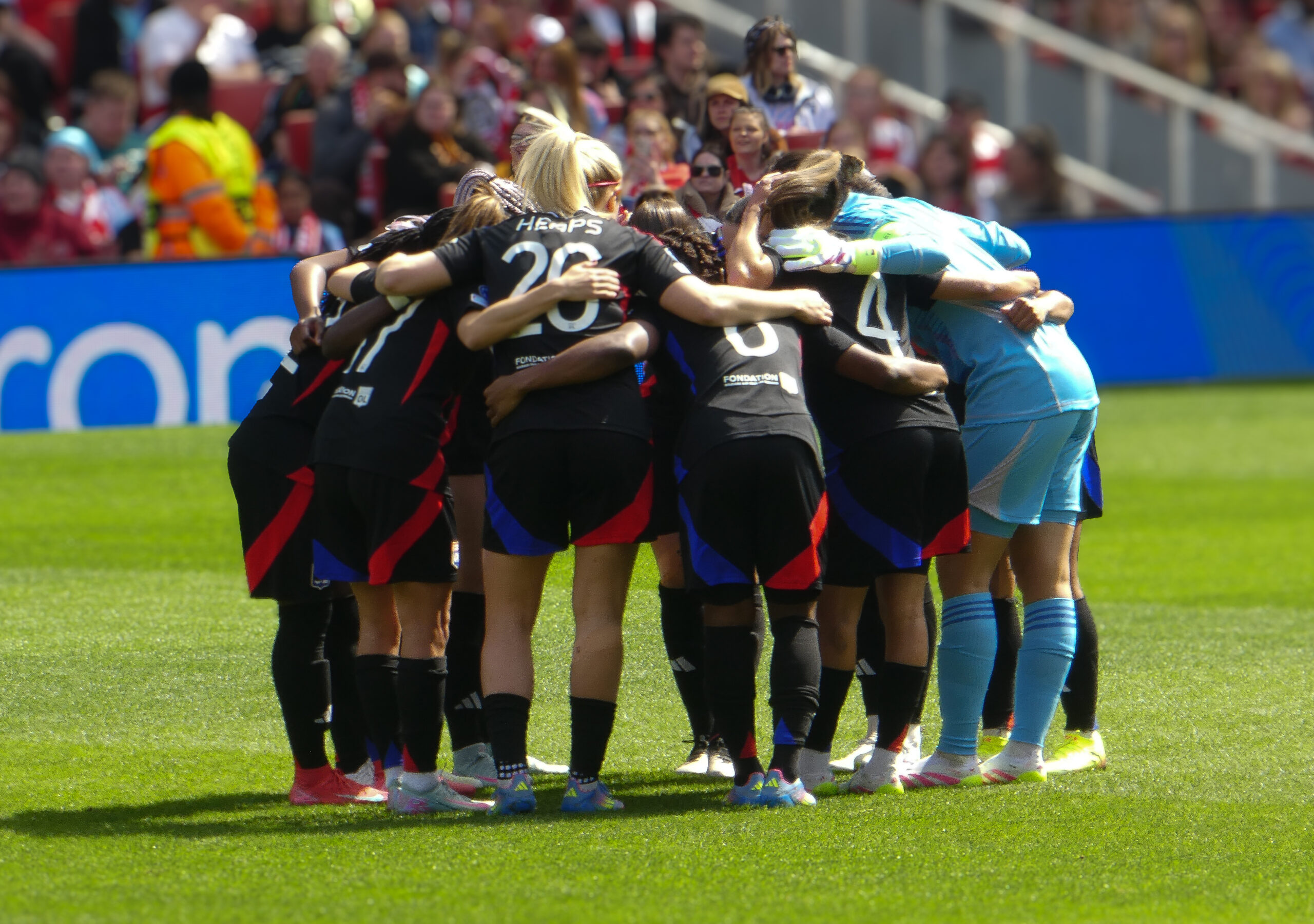
Over the last two decades, the league has been dominated by two clubs: Paris Saint-Germain and OL Lyonnes, formerly Olympique Lyonnais. Lyon alone have collected more than 15 league titles, including extended runs of consecutive triumphs, with PSG’s 2020/21 title standing as little more than a brief interruption. In most seasons, there is effectively one defining fixture, Lyon versus PSG, and a widely held assumption that only two sides can realistically win domestic honours.
This two-club dynamic leaves supporters disengaged, while the remaining ten sides compete largely for a distant third and a potential Champions League place. At first glance, such dominance may appear deserved or even harmless. Yet that is precisely why it warrants closer examination. The consequences stretch well beyond silverware.
When outcomes feel predetermined, commercial growth and match-day engagement suffer. Competitive sport depends on uncertainty and jeopardy. In the Première Ligue, that uncertainty is increasingly scarce.
The Financial Divide
The structural gap begins with resources. Lyon benefit from Michele Kang’s ownership, while PSG are backed by Qatar Sports Investments. Their budgets, training facilities and medical departments operate on a scale that other teams in the league simply cannot match.
Smaller clubs function on modest wage structures and limited commercial reach. As a result, matches can feel decided before kick-off. Superior depth, driven by financial backing, allows the elite sides to rotate across domestic and European competitions without a noticeable drop in performance. Meanwhile, others rely on compact squads and short-term contracts, leaving them vulnerable to injuries and limiting long-term planning.
When the Challenger Feeds the Champion
Among supporters, it has become a running joke that PSG act as an academy for Lyon, with top prospects eventually making the move. Becho, Diani, Schrader, Katoto, Heaps, Lawrence, Endler and Chawinga are among the many who have added red to their blue.
This concentration restricts upward mobility for challengers. Even when emerging sides such as Paris FC or Nantes assemble competitive squads, retaining them is extremely difficult. The pattern reinforces itself. Elite clubs offer Champions League exposure and higher wages, attracting international talent and further strengthening their domestic advantage. Consequently, ambition across much of the league shifts from contention to consolidation.
The Middle
Between the elite and the relegation zone sits a group of stable yet constrained clubs. These teams are too organised to fall into the bottom two, yet structurally incapable of mounting a genuine title challenge. Without redistribution mechanisms, their ceiling remains fixed.
This stagnation diminishes narrative intrigue. A healthy league requires volatility across positions one to four, as well as at the bottom. Instead, European qualification often feels as settled as the championship itself.
Do Playoffs Fix Anything?
Recent structural reforms, including the introduction of a post-season play-off system, aim to increase unpredictability. In practice, however, Lyon’s superiority has rendered format adjustments largely symbolic. Last season, Lyon defeated Paris Saint-Germain 3-0 in the play-off final, reinforcing a hierarchy already evident throughout the campaign.
At present, Lyon sit on 46 points, 16 points clear of second-placed Nantes, illustrating the scale of the gulf. Whether the title is decided by cumulative points or knockout fixtures, the outcome remains heavily skewed towards the same club. Structural dominance of this magnitude cannot be neutralised by scheduling innovation alone. Meaningful parity requires systemic financial and regulatory reform rather than cosmetic change.
European Success vs Domestic Health
French clubs’ continental achievements further complicate the narrative. Lyon’s record in the Champions League has strengthened France’s international reputation. However, European triumph can mask domestic fragility. When one club consistently embodies national excellence abroad, it can simultaneously highlight imbalance at home.
Recent controversies have also diverted attention. Former Guy Roux, a long-serving figure at AJ Auxerre, drew criticism after remarks to L’Est Éclair suggesting women were “not made the same way” as men and that the best players were “cut like boys”. Such comments reflect cultural tensions that continue to surround the women’s game.
Similarly, during a televised match, commentator Daniel Bravo suggested that Paris FC technical director Gaëtane Thiney appeared distracted and “thinking about lingerie or clothing”. These episodes illustrate an environment in which structural debate competes with outdated narratives.
Administrative decisions have also raised questions. The inaugural LFFP Cup final between Lyon and PSG will be staged in Abidjan, Ivory Coast rather than France, reportedly funded by an unnamed sponsor. Supporter groups from both clubs have announced boycotts, arguing that relocating the final within an already congested calendar increases logistical strain and injury risk. Expanding commercial reach may be the intention, but the move further distances the competition from its domestic base.
What Real Competitive Balance Would Require
Addressing imbalance within the French Women’s Top Football League demands structural reform. Revenue-sharing mechanisms could narrow financial disparity. Salary regulation, whether through soft caps or luxury taxes, might reduce excessive concentration. Licensing criteria tied to infrastructure investment across all 12 clubs would raise collective standards.
Transparent governance and consistent reinvestment in grassroots development are equally essential. Competitive balance cannot be manufactured through branding alone. It requires deliberate redistribution and long-term policy alignment.
The league possesses technical quality and global prestige. However, without structural correction, its domestic competition risks becoming ceremonial rather than compelling. Sustained excellence abroad should not obscure the need for equilibrium at home.
The Future
Ultimately, the league’s sustainability depends not only on prestige, but on genuine competitive tension. Elite players increasingly seek weekly high-stakes environments rather than guaranteed domestic supremacy.
The movement of players such as Danielle van de Donk and Ellie Carpenter from Lyon to the Women’s Super League reflects that shift. Career decisions at the highest level now prioritise sustained competitive intensity. Prestige alone is no longer decisive.
The English league can rival Lyon in infrastructure, investment and ambition. Crucially, it also offers a landscape in which several clubs can credibly compete for trophies each season. That intensity from August to May raises performance standards and strengthens commercial appeal. Competitive depth, rather than isolated excellence, underpins its growth.
If the Arkema Première Ligue is to retain elite talent and global relevance, it must prioritise structural balance over symbolic reform. Financial redistribution, regulatory adjustment and collective investment are competitive necessities. Reliance on history is a fragile strategy. Even a club as decorated as Lyon cannot depend indefinitely on legacy to secure its authority.
The coming years will therefore be telling for both the league and its most dominant institution. Without meaningful change, dominance will remain entrenched and the domestic spectacle diminished.