There’s a tendency, when looking back at a striker’s career, to reduce it to numbers. Goals scored, seasons played, silverware won. In the case of Natasha Dowie, those numbers tell an impressive story of golden boots, league titles and international goals, but they don’t quite capture the full picture.
Dowie’s career unfolded during a period of change. She was unknowingly playing more than a game, she was part of a generation quietly pushing it forward, without the support, infrastructure or recognition that exists today.
Her journey into football was never confined to one place. Raised in England, Dowie came through the domestic game at a time when opportunities in women’s football were still limited, and pathways were uncertain. Her early career included spells with clubs such as Charlton Athletic Women and Everton FC women, clubs where Dowie laid the groundwork for what would become a career defined by adaptability, as much as consistency. Even then, as a teenager, she had qualities that would become her trademark: intelligent movement, a striker’s instinct and a reliability that rarely faltered.
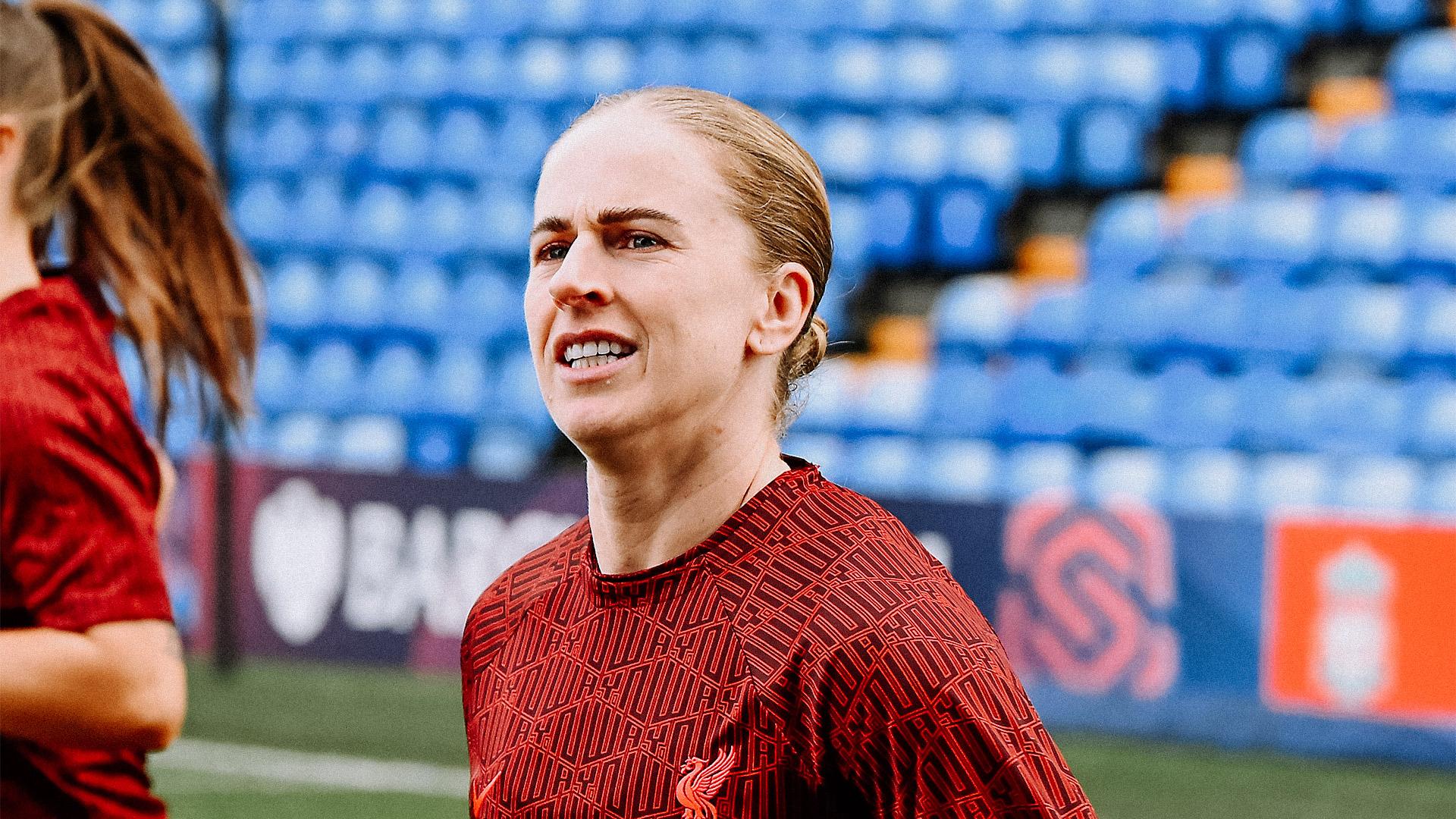
That consistency manifested itself most visibly at Liverpool FC Women. When Dowie arrived in 2012, the club was ambitious but unproven. But within two seasons, everything changed. Liverpool won back-to-back Women’s Super League titles in 2013 and 2014, with Dowie claiming the golden boot as the league’s top scorer in 2013. Dowie was officially at the heart of the transformation that stood before Liverpool FC Women, with her goalscoring ability and creativity in front of the goal playing a pivotal role.
Yet to define her career purely through those years would be to overlook its breadth. Dowie was part of a wave of English players who took risks and built their careers overseas long before it was common. She embraced challenges and opportunities, recognising that each step would lead to growth. Her spells in the United States, Europe and Australia came at a time when the global women’s game was still uneven in its development. Each move required adjustment to new styles, new expectations and often unknown levels of visibility.
At Melbourne Victory FC Women, she became a phenomenon. Twice the W-League golden boot winner, and later a Premiers champion, she cemented her reputation as a striker who could deliver. Later, her time with AC Milan Women reflected the changing landscape of European football where she helped shape the evolution of the game at a time when clubs with well established men’s teams began investing more seriously in their women’s sides.
On the international stage, her 14 caps and five goals for England sit within a chapter of Lionesses history that is often overlooked. Before major tournament wins and widespread media attention, there was a group of players building credibility and momentum for the national side. Dowie was one of them, representing her country with pride at a time when the platform was smaller, but the responsibility no less significant.
What stands out most about Dowie’s career is not just where she played, but how she played. Her style was built on intentional movement, awareness and efficiency – qualities that fall under the radar, but help win titles. She was the kind of player teammates trusted, managers relied on, and fans admire. Dowie was a player whose contribution often becomes clearer when you step back and look at the whole picture.
That sense of perspective feels particularly relevant when considering her return to Liverpool in 2023. By then, the Women’s Super League had evolved into a far more visible and competitive environment. Although her second spell with the club was brief, it was a symbolic link between two eras of the club and the league itself. Upon her retirement at the end of the 2022/23, she left the pitch for the last time as Liverpool Women’s all-time leading goalscorer, a record that speaks to both her quality and her longevity.
Retirement though, has not marked an end point for Dowie. Instead it has shifted the focus of her influence.
Dowie remains an active role model in the world of women’s football, and was appointed as Liverpool FC’s first official women’s ambassador upon her retirement in 2023. She now works within the club’s structure to support younger players, including the girls’ ProGame Academy, the boys’ Academy and the LFC Foundation girls’ programmes among other roles. It’s a role that reflects her experience and passion, not just as a player, but as someone who understands how much the landscape has evolved, and how important it is to maintain that progress.
Her post-retirement chapter took on another landmark moment in 2025 when she became the first female player ever to take part in the LFC Foundation’s official charity match. Dowie’s inclusion was more than a token gesture, it was recognition of her status within the club’s history and the respect she commands across the wider game. Previously dominated by former men’s players, Dowie’s presence also signalled a shift in football culture, with acknowledgement that Liverpool’s story cannot be told without their women’s team. This moment was a defining moment for the generations of women who paved the way before Dowie, and for those who will follow in their footsteps.
Away from football, Dowie volunteers her time with the Owen McVeigh Foundation, highlighting that her impact is not limited to the field. Her fundraising efforts, and use of her platform have helped to support children and families facing serious illness, extending her influence in a meaningful way.
Looking back, Dowie’s career doesn’t fit neatly into a single narrative. It spans leagues, countries and continents. It’s weaved throughout different phases of the game’s development. It includes titles, goals and records, but it also includes quieter, humble contributions – the kind that help build something that will stand the test of time.
That’s possibly the most accurate way to articulate her impact.
Not just as a goalscorer, or a title-winner, but as part of a generation that helped carry the women’s game from where it was to where it is now, leaving it stronger, more visible and better supported than when they found it.
- Liverpool FC honours Natasha Dowie as first official women’s ambassador – Liverpool FC
- Natasha Dowie interview: ‘I’m really proud of my career and excited for what’s next’ – Liverpool FC
- ‘I’m making Liverpool history and I want to inspire next generation of women’s players’ | Liverpool.com
- Natasha Dowie | Owen McVeigh Foundation