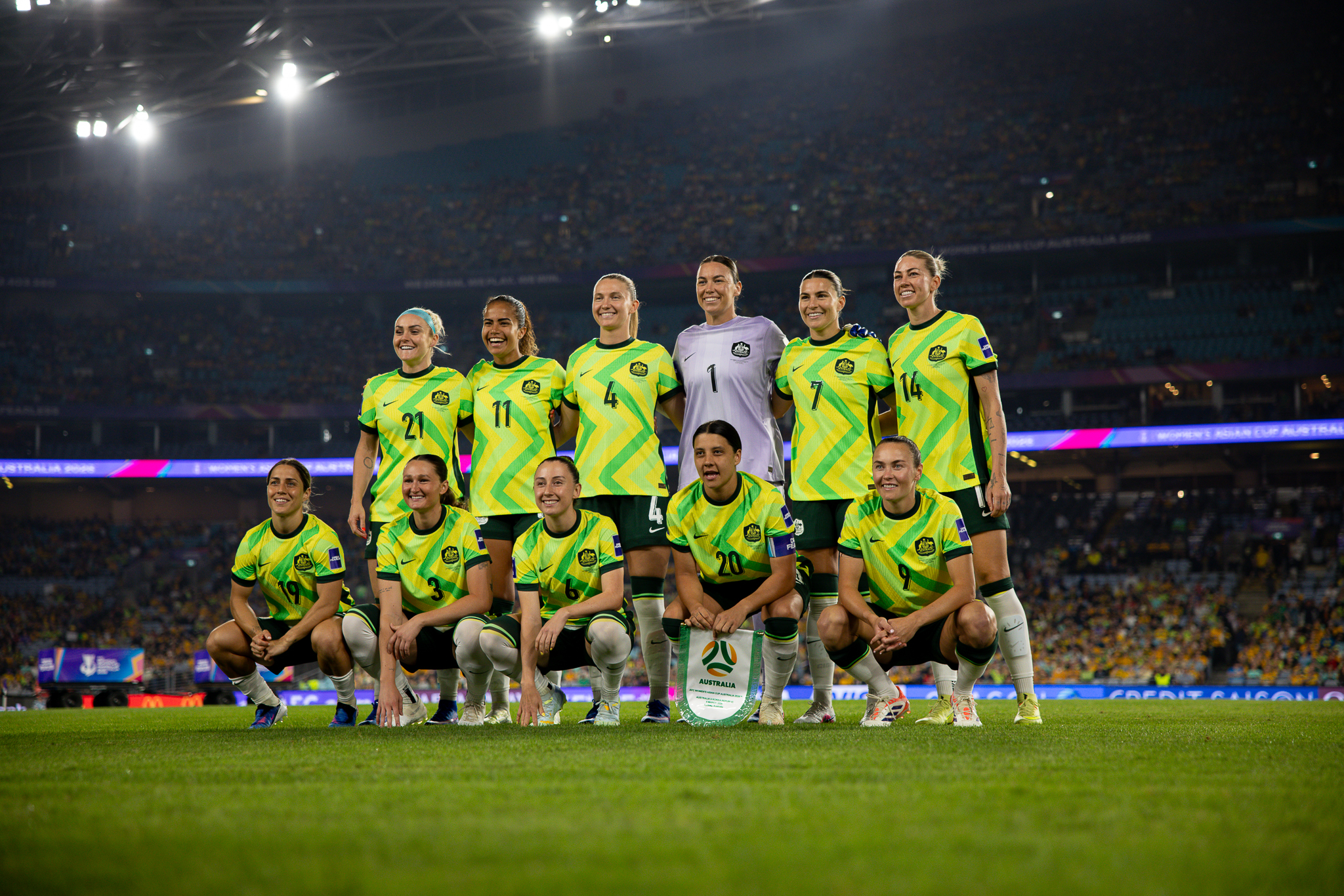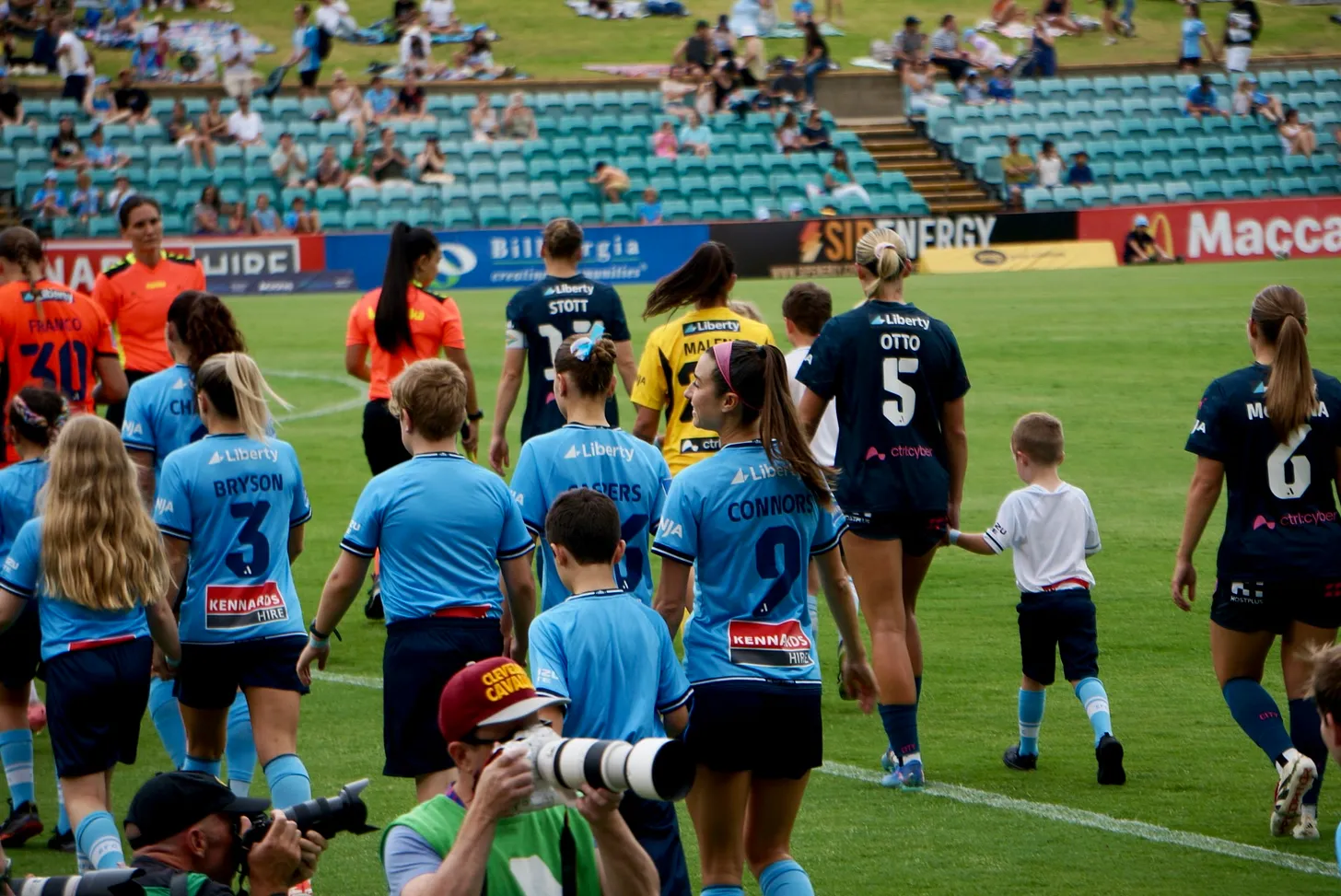
On 25th October 2008, Perth Glory hosted Sydney FC at Members Equity Stadium, marking the historic new beginning of women’s football in Australia. Originally known as the W-League before rebranding into the A-League Women (ALW) in 2021, Australia’s top domestic league has become the true backbone of Australian women’s football culture.
BEFORE THE ALW
In 1974, the Socceroos made a historic debut in the men’s FIFA World Cup in Germany, which provided a newfound incentive to propel both the men’s and women’s game forward. It was in August of that same year when five state-based teams (New South Wales, Northern New South Wales, Victoria, Western Australia and Queensland) came together for a week-long tournament held in Sydney called the National Women’s Championship. The competition would run annually until 1993, and, additionally, was the reason behind the formation of the Australian Women’s Soccer Association (AWSA), an organisation established to foster and promote women’s football in Australia.
Three years after the conclusion of the National Women’s Championship, AWSA went on to form the Women’s National Soccer League (WNSL), which was the first nationwide club competition in Australia. The league initially consisted of six sides split into two conferences (north and south), each representing a state-based sport institute, before they transitioned into formal clubs. This structure remained untouched until 2004, where the Western Waves were briefly introduced into the competition before the WNSL folded completely in tandem with its male counterpart.
OPENING THE DOORS
Following the Matilda’s advancement to the quarter-final of the 2007 Women’s World Cup, head coach Tom Sermanni voiced a proposal to establish a professional women’s league, noting that it was a necessary way to continue the sustainable development of players.
This call to action created the boost needed for Football Federation Australia (now known as Football Australia) to launch the W-League in 2008. Emulating the structure of the A-League Men (ALM), the inaugural W-League season saw eight clubs (Adelaide United, Brisbane Roar (previously Queensland Roar), Canberra United, Central Coast Mariners, Melbourne Victory, Newcastle Jets, Perth Glory and Sydney FC) play 10 rounds along with a finals play-off. Queensland dominated the league in its maiden season, taking home both the premiership and championship
SOLIDIFYING A NAME
In late 2020, the Australian Professional Leagues (APL) took complete ownership of the top-tier men’s, women’s and youth domestic competitions in the country. This marked a massive step forward in aligning the Australian footballing scene with those globally and also seized an opportunity for greater cohesion and unity throughout the sport.
And so unify they did. In September 2021, it was announced that the top-tier men’s and women’s leagues would be rebranded and collectively be known as the A-Leagues. This came after consultation with fans, staff and players, who decided that aligning the leagues under an amalgamated banner was the way to go forward. This rebrand showed a significant step in levelling the playing field, allowing women’s football to be seen through the same lens as its male equivalent, with no hierarchical or titled separation between the two. It was the first time an Australian football governing body had taken the step to recognise men’s and women’s football as equal, which was something that was not present in the country prior.
Whilst it may be seen as miniscule compared to the issues that still linger throughout the competition, for many, this change was expressed to be one of the most significant developments the league has seen since its inception, and solidified a commitment to the women’s game ahead of the Women’s World Cup that was set to take place two years later.
THE NEW WAVE
During the middle of a sharp Australian winter in 2023, the nation truly opened its eyes to the world of women’s football. Millions of fans across the country tuned in to watch the Matildas make a historic semi-final run in a home world cup. It was one of the biggest sporting events Australia had ever seen, and marked what was simply the beginning for football for the country.
Participation in grassroots programs sky-rocketed, and for many it was the first time they got to see women playing on the biggest stage. Stadiums were being sold out, attendances were surpassing that of the Socceroos, and the ripple effect also reached the ALW the following season, much thanks to Cortnee Vine. Globally known for her match-winning penalty in the quarter-final against France, Vine’s strike solidified her as a household name and was inevitably a significant pull factor towards fans attending the matches of ALW side Sydney FC. In the 2023/24 season, the ALW saw a stark increase in attendances, with a record 11,471 fans making the trip to Allianz Stadium to see the Sydney Derby.
Across the entire competition that season, there was a total attendance of 307,989. This is and remains the highest total attendance in a singular season, which truly reflects the influence a major home tournament had on Australia.
HIGHS AND LOWS
Through the years, the number of teams competing has seen fluctuations based on the financial investment clubs are willing to give to their women’s side. In the 2010/11 season, the Central Coast Mariners were forced to withdraw due to an absence of funding dedicated to the women’s team, dropping the number of competing sides to seven. The competition returned to eight teams in 2012/13 following the formation of the Western Sydney Wanderers. Melbourne City burst onto the scene in the 2015/16 season, where they went through a remarkable invincible run, winning all 12 regular season games along with the grand final. Further expansion saw New Zealand side Wellington Phoenix join in 2021/22, Victorian team Western United join in 2022/23, and the Central Coast Mariners re-entered the picture in 2023/24.
As of the 2025/26 season, the ALW has fallen back to 11 competing teams, following the temporary removal of Western United’s licence due to ongoing financial issues amongst the entire club setup. Despite numerous appeals and disputes with Football Australia, the Victorian club will not be in the A-League structure until at least the 2026/27 season, where their licence status will be reviewed.
Western United isn’t the first A-League side to be left in financial strife in recent times either. Lack of investment has led to Canberra United – the capital’s only professional football team – being left without a clear future across the last few seasons. Fortunately, Canberra have managed to pull through all of these tough times, but the instability for staff, players and fans of the club has highlighted how far this league still has to go.