From nearly missing out to becoming African champions, Cameroon’s journey at WAFCON 2026 was nothing short of incredible. The Indomitable Lionesses were not even supposed to be in the tournament after failing to qualify through the traditional route. But a second chance through CAF’s expanded 16-team format gave them an unexpected lifeline and they turned it into history.
Just weeks later, Cameroon were lifting their first-ever Women’s Africa Cup of Nations trophy, completing a remarkable journey that saw them overcome Nigeria, survive hosts Morocco and defeat Malawi 3-0 in the final. For a team that had lost three previous WAFCON finals, this was the moment everything finally changed.
A second chance
Cameroon’s road to Morocco had initially ended in disappointment. They lost 3-1 on aggregate to Algeria in their qualifying tie and looked set to miss another edition of the tournament. It was particularly frustrating after they had also missed the 2024 WAFCON. But CAF’s decision to expand the competition from 12 to 16 teams opened the door. Cameroon were brought into the tournament based on their world ranking, alongside other teams who benefited from the expanded format.
It was a second chance that the Lionesses would not waste. Cameroon had already established themselves as one of Africa’s strongest women’s football nations, but there was one thing missing from their history: a WAFCON title. They had reached the final three times before and lost each time, in 2004, 2014 and 2016, all against Nigeria. This year, they finally had another opportunity.
A strong start
Cameroon began their campaign with a 1-0 victory over Ghana before beating Mali 2-1. Those results were enough to establish them as serious contenders and secure top spot in their group. But the knockout stages would provide a completely different challenge. Their quarter-final opponents were Nigeria, the defending champions and the most successful team in WAFCON history. The odds appeared to favour the Super Falcons, but the Lionesses produced one of the biggest results of the tournament.
Cameroon shock Nigeria
Myriam Nyadjou gave Cameroon the lead with a free-kick in the 19th minute. From there, the Lionesses had to withstand enormous pressure from Nigeria. Much of that resistance came from goalkeeper Michaely Bihina. The 22-year-old produced save after save to keep her side ahead, finishing the match with nine saves, a record for a single game at the finals.
Nigeria could not find a way through. When the final whistle went, Cameroon had won 1-0 and knocked the defending champions out of the competition. The team that had been given a second chance was now two games away from becoming champions.
Facing the hosts
Next came another huge challenge: Morocco. The hosts had home support behind them and were determined to reach another WAFCON final on home soil. But Cameroon had become incredibly difficult to break down. Neither side could find a breakthrough during normal time, sending the match into extra time.
Then came the moment that once again made Bihina the hero. Morocco were awarded a late penalty, but Bihina dived to her right and pushed the ball away. The match eventually went to a shootout. And Bihina was ready. She saved three penalties as Cameroon won the shootout 3-1. The Lionesses were through to the final. They had also secured their place at the 2027 FIFA Women’s World Cup.
The final
Standing between Cameroon and history were Malawi. The Scorchers had produced one of the tournament’s biggest fairytales, reaching the final on their WAFCON debut. Led by the dangerous Chawinga sisters, Malawi had already shocked Nigeria and continued their extraordinary run all the way to the final.
But Cameroon were clinical. Marie Ngah Manga opened the scoring in the 20th minute, reacting quickest after Malawi goalkeeper Mercy Sikelo could only push a cross onto the bar. Ten minutes later, Naomi Eto doubled the advantage with a stunning volley. Cameroon were not finished. In first-half stoppage time, Eto rounded Sikelo before setting up Ngah Manga, who calmly headed into an empty net. 3-0 at half-time.
Cameroon were 45 minutes away from history. Malawi tried to respond after the break, but the Lionesses remained composed and managed the game intelligently. Ngah Manga even had a chance to complete her hat-trick, only to fire wide with the goal at her mercy. However, it did not matter, Cameroon had done enough.
Champions!
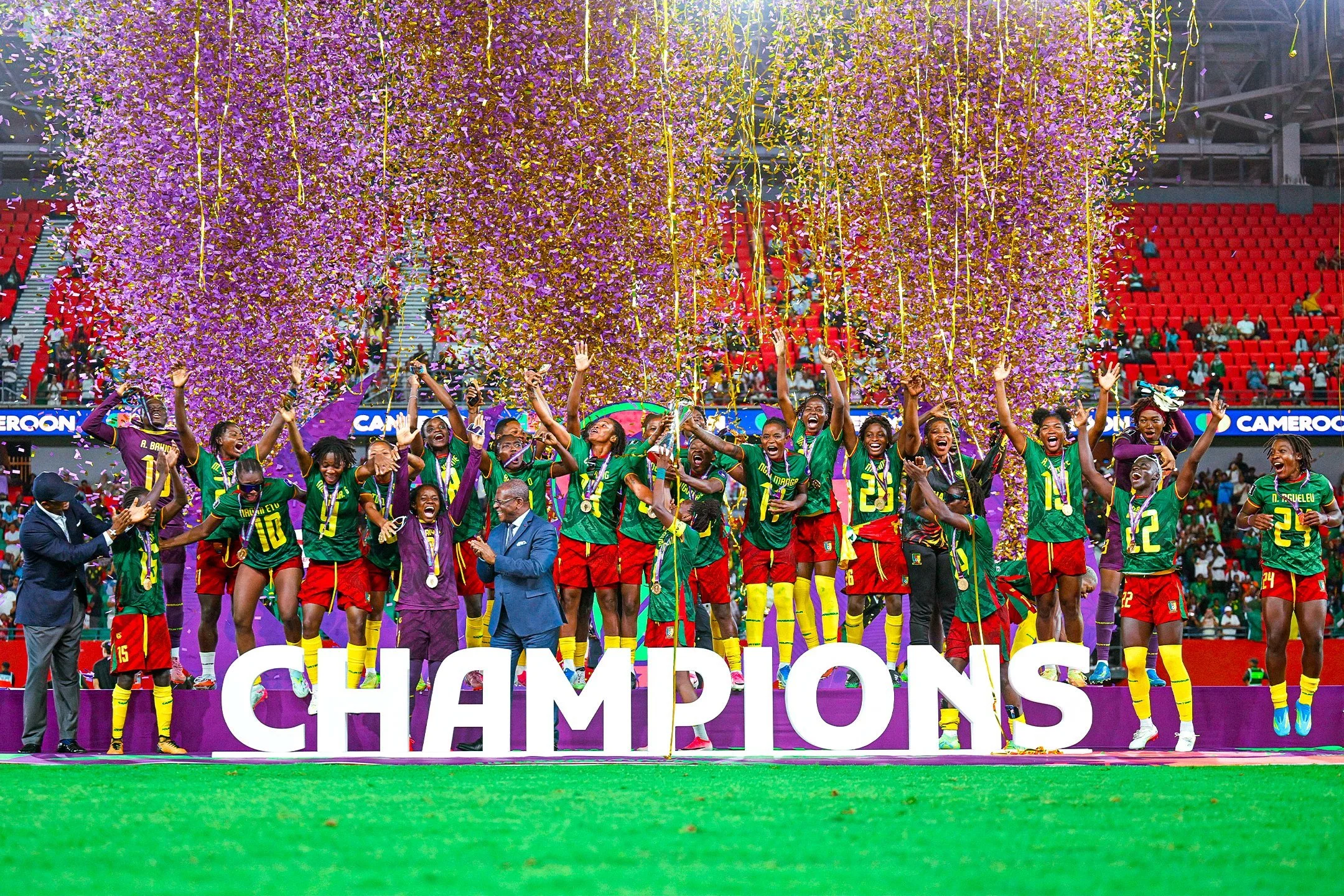
When the final whistle was blown, the celebrations began. Cameroon had beaten Malawi 3-0 to win their first-ever WAFCON title. After three previous final defeats, the wait was finally over. The Indomitable Lionesses had gone from almost missing the tournament entirely to becoming champions of Africa.
And their success was built on more than one performance. Bihina was crucial throughout the knockout stages, producing nine saves against Nigeria and saving four penalties against Morocco. Her performances earned her the Best Goalkeeper award, while Monique Ngock was named Woman of the Competition. Ngah Manga also delivered when it mattered most, scoring twice in the final. Malawi’s Temwa Chawinga won the Golden Boot with five goals, while Algeria received the Fair Play Award. Together, they formed a side that got better every round.
A new chapter in Cameroon’s history
Cameroon’s victory also made them just the fourth nation to win the Women’s Africa Cup of Nations, joining Nigeria, Equatorial Guinea and South Africa. Nigeria remain the competition’s dominant force with 10 titles, while Equatorial Guinea have won twice and South Africa once. Now Cameroon finally have their own place in that history.
They were nearly out of WAFCON, but a second chance changed everything. Cameroon took it, topped their group, knocked out the defending champions and hosts, and beat Malawi in the final. They arrived in Morocco with a second chance and left as African champions.