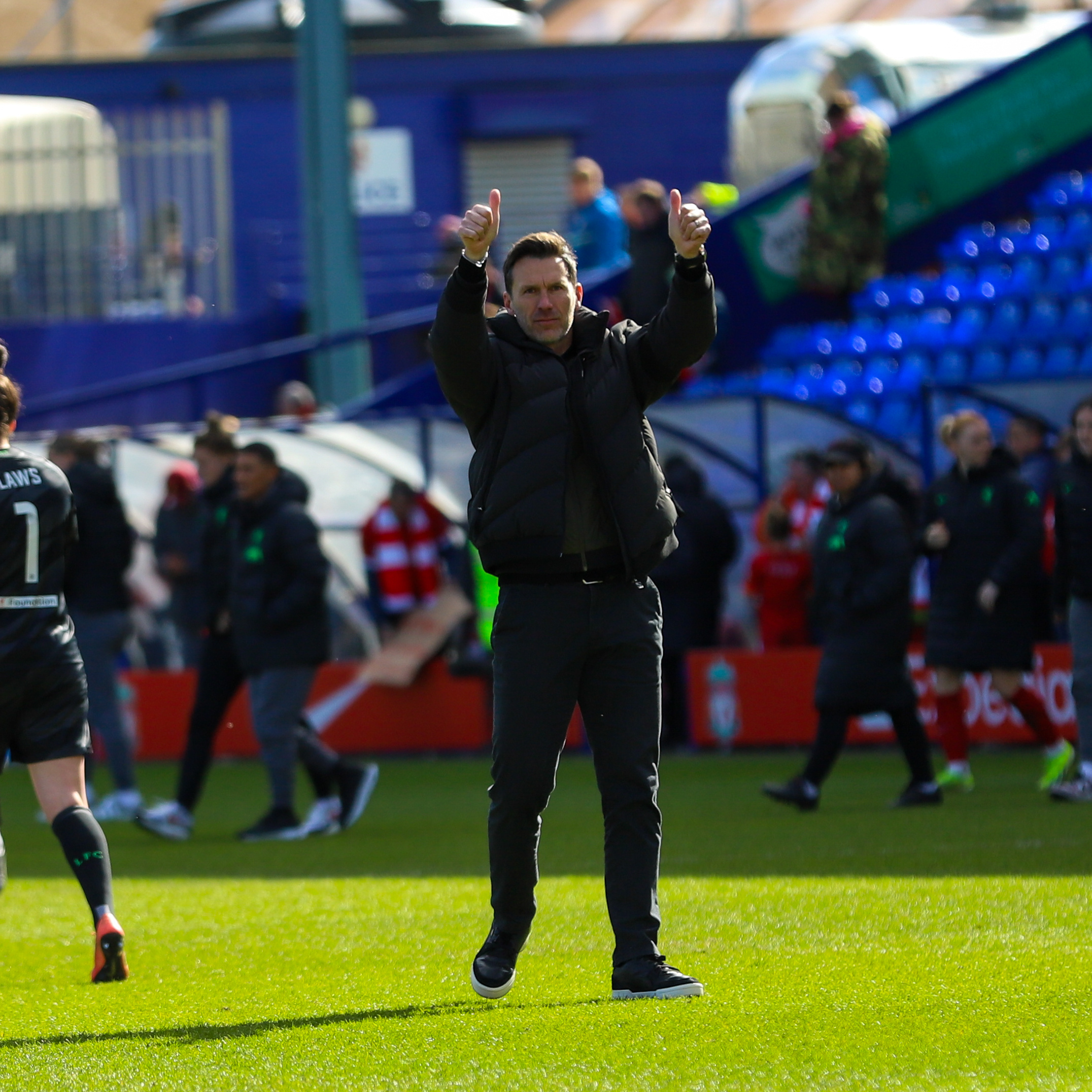
Gareth Taylor begins his second season in charge of Liverpool with the expectations around the club considerably higher than they were 12 months ago. His first season was difficult from the beginning. Liverpool finished 11th in the WSL, winning just four of their 22 league matches, while injuries, a disrupted pre-season, squad changes and difficult circumstances around the club all contributed to a campaign that fell well below expectations.
But Taylor has now had time. He has experienced the league with Liverpool, identified where the squad needed improving and overseen a major summer of recruitment. The club have brought in Vivien Endemann, Sara Agrez, Mari Ward, Khiara Keating, Mao Itamura and Natalia Ramos, while Marie Höbinger is finally back after missing almost the entire 2025/26 campaign with an ACL injury.
There is also a greater sense of continuity. Taylor knows his players and he knows where Liverpool need to improve. That’s why this season is different. Liverpool are not simply looking to survive anymore. They need to start moving back towards where a club of their size expects to be. The question is whether Taylor can turn the progress he spoke about last season into consistent results.
A difficult first season:
Gareth Taylor never hid from the problems Liverpool faced. Reflecting on his first campaign, he described it as “a really challenging first season” and pointed towards the late arrival of several key players, the departures of Olivia Smith and Taylor Hinds, injuries and the difficult circumstances surrounding the club.
Those factors undoubtedly made his job harder. However, finishing 11th cannot simply be ignored. Liverpool were involved in a relegation battle for much of the season and finished with just 17 points. For a club with Liverpool’s history and ambitions, that is not where they want to be.
Taylor himself acknowledged at the end of the campaign that the club needed to make the right recruitment decisions and bring in players who could help them “step up the league table”. Liverpool have now made those changes.
The second half offered hope:
There was, however, a clear improvement after Christmas. Liverpool’s second-half points return was the fifth-best in the WSL, while the arrival of new players in January gave Gareth Taylor more competition for places and a deeper squad to work with.
The team also reached the FA Cup semi-finals, showing that there was more quality within the group than their league position suggested. Taylor spoke about the team beginning to “click” and developing the identity he wanted. That is important because this season, Liverpool need that identity to become the norm rather than something that appears only in flashes.
Now the pressure increases:
Liverpool’s summer recruitment has naturally raised expectations. Vivien Endemann provides another attacking threat, Sara Agrez strengthens the defence and Khiara Keating gives Gareth Taylor another option in goal. Mao Itamura arrives with plenty of potential, while Natalia Ramos adds further creativity.
Perhaps the biggest boost of all is having Marie Höbinger back. The Austrian midfielder was one of Liverpool’s most important players before her ACL injury, and her return gives Taylor another creative option in the middle of the pitch.
Ceri Holland also remains a hugely important figure after an excellent individual campaign. The ingredients are there. But competition for the European places in the WSL is only getting stronger.
Chelsea, Arsenal and Manchester City will expect to compete near the top, while London City Lionesses, Tottenham, Brighton, Manchester United and others are all looking to close the gap. Liverpool therefore cannot afford another slow start. They do not necessarily need to challenge for the title this season, but they need to be much closer to the European conversation.
The FA Cup showed what is possible:
Liverpool’s FA Cup run provided perhaps the clearest indication of what Gareth Taylor’s side can produce. They defeated Charlton in the quarter-finals before taking a 2-0 lead against Brighton in the semi-final. Eventually, however, Brighton completed the comeback and won 3-2 through a stoppage-time goal. It was a painful ending, but the run demonstrated that Liverpool can compete against strong opposition. The next step is doing it regularly in the league.
Gareth Taylor has to deliver:
Gareth Taylor has spoken repeatedly about improving Liverpool’s standards, changing their identity and building something for the future. He now has the opportunity to show that progress on the pitch.
The squad is stronger. Key players are returning. New signings have arrived. Taylor has a full season of experience behind him. There are still challenges, and the WSL will not make things easy. But the circumstances are different now. Last season was about laying the foundations. This season is about building on them. For Gareth Taylor, that means one thing: Liverpool need results.