Content note: This article discusses body image, self-esteem, bullying and personal experiences that some readers may find sensitive.
I have always loved football.
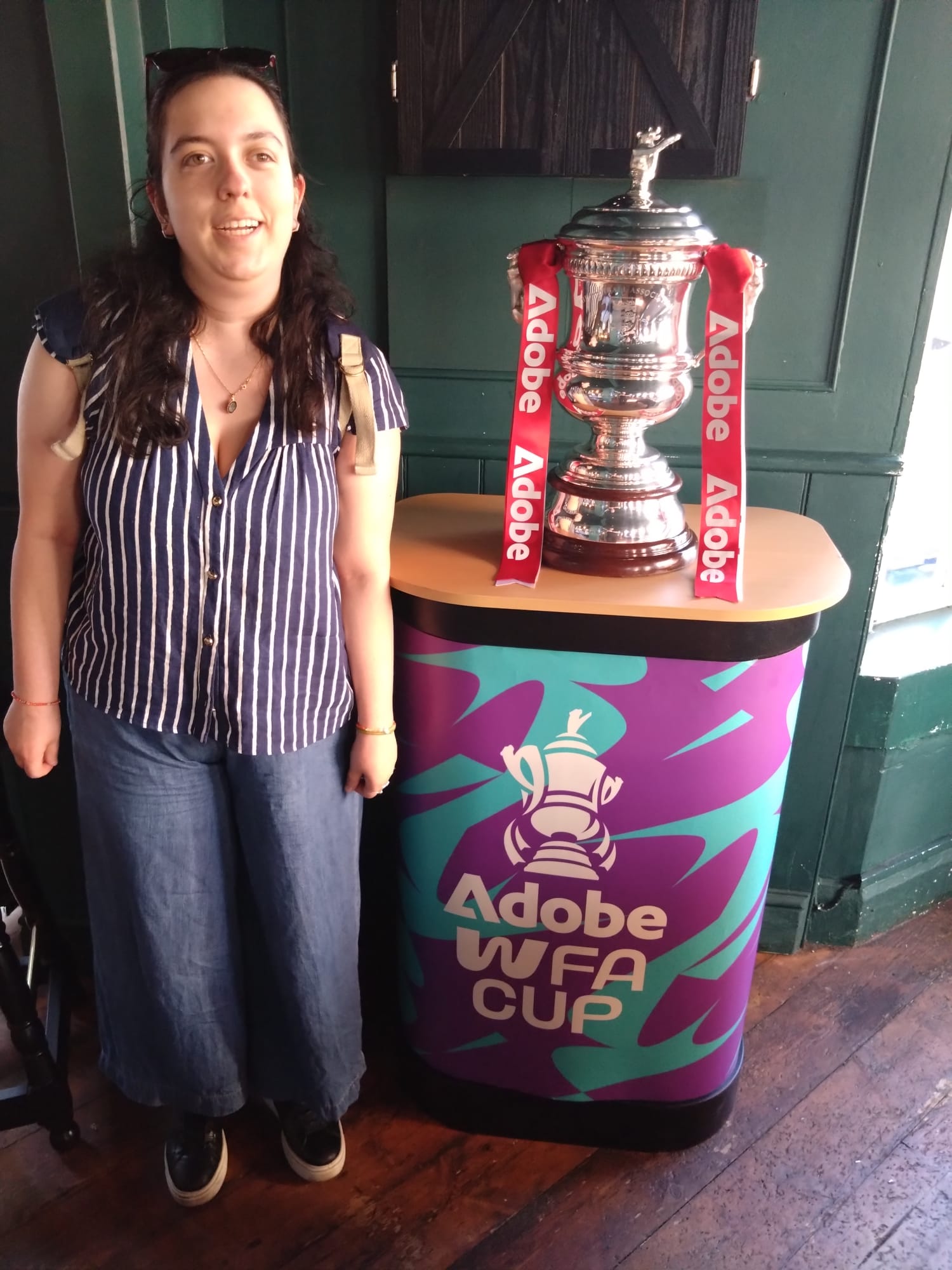
From one of my first experiences watching England defeat Northern Ireland at Wembley in 2021, to attending the Euros victory parade last year and reporting on my first Women’s Super League (WSL) game as media, football has given me so many unforgettable memories.
But with most people who work in sport, the journey has not always been as straightforward as I would like.
I had many ups and downs on and off the pitch, whether playing sport or in my personal life. Although most of my experiences have been largely positive so far, there have been times when I doubted myself and lacked confidence.
Fitting in, meeting new people, making new friends. Wondering if I was good enough, talented enough. Wondering whether I really belonged in the football community.
A 2021 study by the University of Granada found that sportswomen were twice as likely to experience body-focused pressures in addition to the expectations put on them by society due to the sport they practice. High-profile athletes such as Fran Kirby and Jill Scott have been vocal about body image in sport, speaking about ‘body shaming’ and the scrutiny they face online despite being successful in the field.
For me, that never rang truer.
Growing up, I always had a hate-hate relationship with sport.I struggled (and still do) with basic tasks, including catching and throwing a ball or balancing on one leg – things most people wouldn’t think twice about. They might seem like small things that don’t matter to others, but to me, they always did.
I was often picked last when teams were chosen or when we had to find a partner in PE at school. More often than not, I felt like the butt of the joke or the reason my team lost (usually by the smallest of margins). I noticed the quick, dismissive looks from classmates, especially the girls, when I was put on their team, or the comments made when they thought I couldn’t hear them.
These were small things that seemed insignificant at the time but really stuck in my mind.
But was I really good enough for sport?
Even in primary school, I struggled to tell the difference between someone being genuinely welcoming or whether they were only being kind because someone had told them to, or because they knew I was neurodivergent.
Sport was meant to be fun, enjoyable, a happy part of childhood. But for me, on most days, it was absolute hell. Perhaps it was the laughter that got to me, or the snarky looks from my peers. Maybe it was the feeling that I could never live up to what was expected of me at that age.
Having the perfect body. Tall, slender, confident. Looking beautiful and feeling comfortable in your own skin. Accepting that I was never going to be like them. Feeling insecure in the changing room, comparing myself to other girls, even going to the gym – until I lost my confidence and became discouraged from sport altogether.
I put on weight. I avoided sports classes, wearing swimsuits, or anything that made me feel self-conscious or uncomfortable. I dreaded being judged by others in public for the way I looked.
I detested the way I looked in the mirror – curvy, flabby, flushed, and wished I could turn back time and become someone who fit the mould I believed was expected of me.
For the longest time, I believed that confidence, happiness, and being easy-going all came from looking a certain way. I needed to love myself again. Those feelings of inadequacy and self-doubt never went away, even as I grew into adulthood.
There are still times when I look at myself at events and compare the way I present myself to everyone else. The smallest things that seem insignificant to most people somehow matter to me.
Over time, I stopped caring about what people thought of me. I did get the occasional comment about my appearance every now and then, but I learned to take it in my stride.
I started loving sport again for what it was – the sense of camaraderie between friends and teammates, the sense of enjoyment and freedom I felt running on the pitch, without the threat of judgement hanging over me.
I had finally found my happy place.
Even now, working in sports media, I still feel that sense of imposter syndrome whenever I walk into a press box, a conference room, an event space, or even in my personal life. I often look around the place and see everyone, even fellow journalists and content creators more confident and experienced, completely at ease.
Football is all about belonging and being your authentic self. Perhaps I should have accepted that years ago. Maybe I should not have taken it as seriously as I once did, and instead taken it as my own. Life is too short to hold grudges.
I always wondered whether I belonged anywhere, whether at school, in sport or simply in everyday life. Yet as I move further into my sports media career and learn more about myself, I’ve realised there is no one way to look or no single standard you have to live up to in sport.
I may never have been the most co-ordinated person or the fastest athlete on the pitch, but if someone had told me when I was younger that one day I’d be working in sport, I would never have believed them.
Women have made huge strides in confronting body image and stereotypes in football, but challenges remain.
Football is about embracing your own journey in the game. Your experiences, your insecurities, your perspective, and recognising that no two people will ever see the game in quite the same way.
If Fran Kirby, Jill Scott and Fara Williams can speak openly about their experiences with body image and encourage others to embrace who they are, then it’s high time that I do the same.
https://www.frontiersin.org/journals/psychology/articles/10.3389/fpsyg.2021.718836/full