As I moved to Glasgow for university, I wasn’t about to take a year away from journalism, so I decided to see what Scotland’s women’s game was all about. What I found was a game that had largely missed the Euro 2022 moment experienced in England and across much of Europe, but one that was still home to a growing women’s football community, thriving in some ways and struggling in others.
Before discussing the Scottish game, I think it’s crucial to go over the structure, as it puts everything else into context. The SWPL is made up of 10 teams, while SWPL2 is the second national division with another 10. Five of the SWPL clubs – Heart of Midlothian, Hibernian, Celtic, Glasgow City and Rangers – are fully professional, with players earning a full-time salary and training every day. The other 15 clubs across both divisions are all part-time, albeit to varying degrees.
This inherent difference defines much of the league. Essentially, the SWPL feels split into two groups of five that compete amongst themselves, as almost every match between a professional and a part-time side is a one-sided affair. We’re used to seeing these sorts of games in women’s football, but as the game has developed, those results have become far less common across many of the world’s top leagues.
It’s also important to note how many of the clubs actually work. For many of the part-time clubs, the women’s side is organisationally separate from the men’s team. Hamilton Accies are a good example of this. The people who run the women’s side are not employees of Hamilton, but instead run a football team that has an agreement with the wider club to use its name and kit. Most non-professional clubs operate in this way, meaning finances, sponsorship and media are all managed by a separate organisation.
Obviously, this limits how much a team can invest, and while this system remains in place, it will probably continue to get in the way of a fully professional league, which I think is where the game should ultimately be heading. There are also several clubs with huge profiles in the men’s game that remain uncompetitive in the SWPL, which doesn’t do much to help the league’s profile as a whole.
Stadiums
While not an issue unique to Scotland, the location and quality of stadiums used for SWPL games typically leaves a lot to be desired. As was the norm in England a few years ago, the chosen stadiums are often of men’s non-league clubs on the outskirts of a City.
Of the five professional clubs, only two actually play in their ‘home’ city. Celtic and Rangers, by far the two biggest clubs in Scotland in the men’s game, both play outside Scotland’s football capital Glasgow. Celtic play all games aside one Old Firm derby per year in Hamilton. At least New Douglas Park is a stadium, with seating on three sides of the ground. I wouldn’t recommend the hot food from the counter, though.
As for Rangers, that situation is even worse. After announcing with great fanfare that they would be playing “more games than ever” at the men’s home of Ibrox, the club assured fans that matches would only be moved in the event of scheduling conflicts. Yet somehow, since hosting Celtic at Ibrox on 14 November, Rangers have played 10 home matches, and every single one has taken place at Broadwood Stadium in Cumbernauld.
It all came to a head in April in embarrassing fashion for the Ibrox club. With a title-defining clash against league leaders Hearts scheduled as part of a special Friday night round of SWPL fixtures, it finally looked as though Rangers would return to Glasgow for a home game.
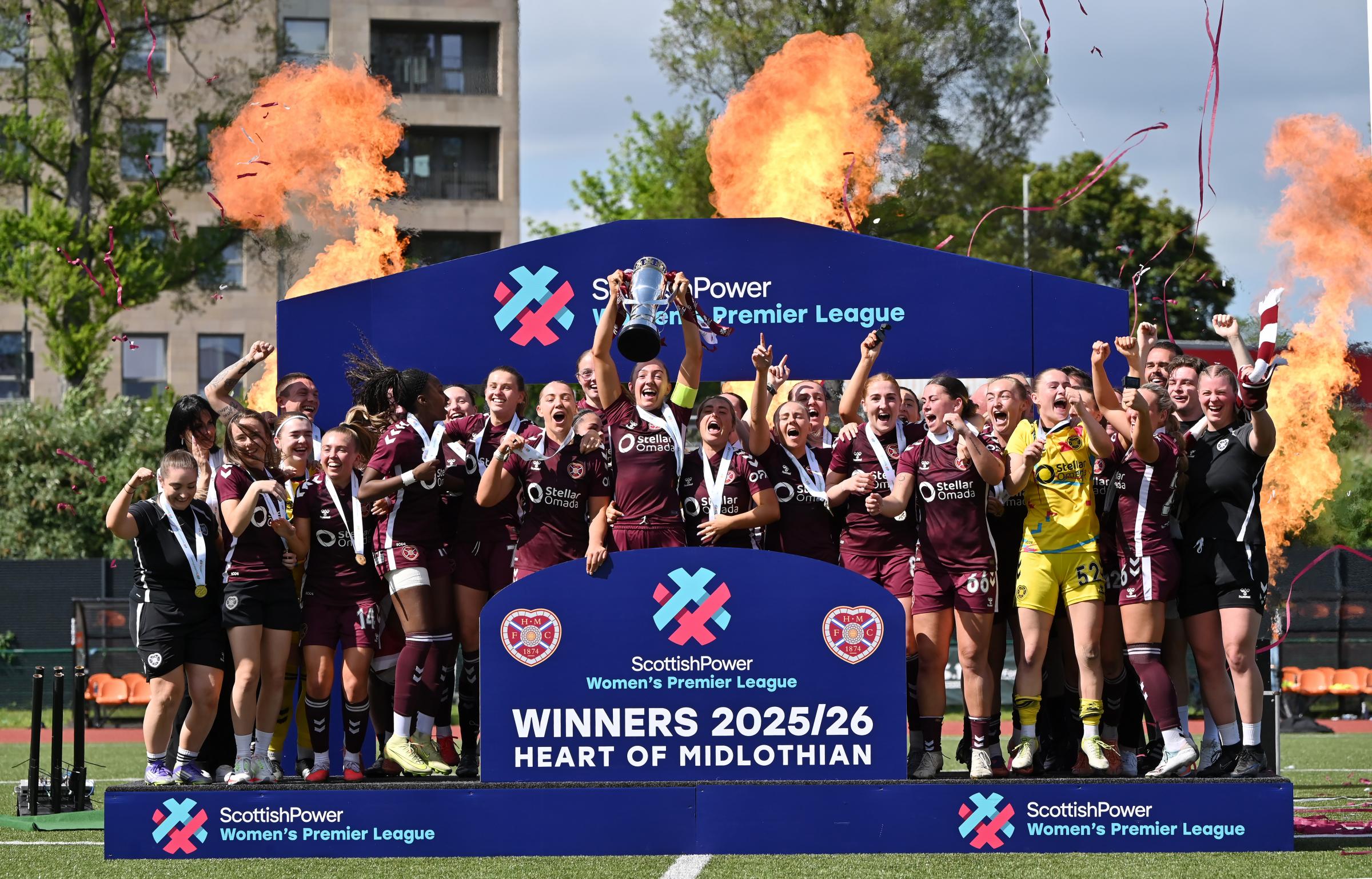
However, on the eve of the game the club announced that due to a condensed men’s schedule at Ibrox, they would move the women’s game to protect the pitch. To rub salt in the wound, Broadwood was already booked that evening, meaning Rangers had to bring kick-off forward to 4:30pm, severely limiting who could attend. Ironically, Hearts won the game 2-1 and went on to lift the title by two points, while the men’s team completely fell apart during the final run-in.
Surely the SWPL champions play at a nice ground in the centre of Edinburgh, at least? Well, not quite. Oriam Sports Centre sits on the grounds of Heriot-Watt University, around seven miles outside the city centre. As for the facilities, there’s one small roof covering roughly half of one side of the pitch, with just one or two rows of seating beneath it. Meadowbank, the leisure centre that hosts Hibernian, offers a similar setup, although at least it’s conveniently located for supporters, just a few minutes’ walk from Leith, the traditional home of the club.
Fan Culture
Closely linked to the point about stadiums is the fan culture across the league. Scottish football fans have a reputation for being some of the most passionate on the planet, with a loyal base of supporters turning up to back their teams whatever the result, performance or weather. I think it’s only natural to expect some of that to carry over into the women’s game.
However, this isn’t exactly what I experienced. Don’t get me wrong, there are still so many dedicated fans who turn up every week to support their teams, but in terms of overall numbers, it isn’t anywhere close. There are a multitude of nuanced reasons why that’s the case, but when it comes to what can be addressed in the here and now, it feels as though the clubs could be doing more to build that support.
Celtic and Rangers are such significant institutions in the fabric of Scottish football. At least in the men’s game, everything ultimately comes down to those two clubs and their rivalry. They can sell out their stadiums without blinking, have supporters across the globe and rank among Europe’s biggest clubs in terms of reputation. Yet in the women’s game, despite being professional and competing for honours, they’re barely distinguishable from the rest of the league.
Not that attendance figures are published anywhere, but I’d guess Celtic probably just edge it, with Glasgow City, Hibernian, Hearts and Rangers close behind. Given the context of the men’s game, it’s crazy to think Celtic and Rangers don’t automatically have a built-in advantage.
The question of how to create and develop that fan culture is still being explored in England, even by the most successful WSL teams like Chelsea and Arsenal. By no means should it be expected that clubs in Scotland have solved that already. But I do wonder whether making a concerted effort to define what it means to be a women’s football fan in Scotland, and to build a shared identity around that, could lead to a bigger and more engaged fanbase.
Media Coverage
You’ve probably got no idea what happened in the SWPL last season. Who won, who the best players were, or about the generational battle for sixth place that unfolded three months before the season ended. And I can’t blame you for that – there simply wasn’t the coverage. Across both the wider football media and Scottish-specific outlets, there’s a distinct lack of reporting on the league.
Of course, there isn’t much demand for it, but I think that’s mostly because people don’t know it’s there in the first place. You have to build that audience, and once you do, people come and they stay.
Quality of Football
The narrative around the quality of women’s football has always been there, and Scotland is no different. I’m sure most people would explain away the differences in attendance, media coverage and general awareness by pointing to the quality of football. I think that’s a short-sighted way of looking at it.
Yes, there are mistakes, and probably some games where you’d want your 90 minutes back, but there are also some really exciting players in the league. Scotland’s first-choice striker Kathleen McGovern has graced the SWPL with some wondergoals over the past two seasons, while South African international Linda Motlhalo runs the show for Glasgow City. Maria McAneny always gets the Celtic fans off their feet, and Momo Nakao ensures things run smoothly in midfield.
Given all of this, and reports earlier this year that professional clubs wanted to reduce their investment because of the lack of revenue being generated, it can feel as though having a women’s team is more of a burden than a benefit to some clubs. Based on the treatment of fans and players, it’s hard to argue against that. At the same time, it feels as though more effort from those clubs could unlock so much more for the game.
The Glasgow City Factor
Glasgow City always seem to make themselves relevant whenever the Scottish game comes up, and they’re an antidote to much of the above. As an independent club, much of this simply doesn’t apply to them. Their entire budget, staff, leadership and fanbase are centred around women’s football and this team.
There can be no question of Glasgow City’s commitment to the team – they literally wouldn’t exist without it, and it’s the opposite of a burden on the club. They’ve spent the last 20 years doing the work needed to build a community around a women’s football club in Scotland. Competing for football fans in a city like Glasgow is no easy task, but over the course of their existence the club have made a concerted effort to engage with people across the city and inspire them to get involved with the club, and by extension, women’s football itself. With the pull and power of some of Scotland’s biggest clubs, I’m sure they could help build that same sense of community on an even bigger scale.
With all that said, at the heart of it, while Scottish women’s football has its many issues, there are some unbelievably talented and hard-working people who have taken the game so far from where it started.
There are some of the best players on the planet plying their trade here, giving the people of Scotland the chance to watch them first-hand. There are players who might never have had the opportunity to build a professional career elsewhere but have found one in Scotland. There are supporters who follow their team up and down the country, singing every weekend. And there are volunteers who give countless hours of their time so that their daughters have role models to look up to.