“Sydney Sweeney, this is what women in sport look like.”
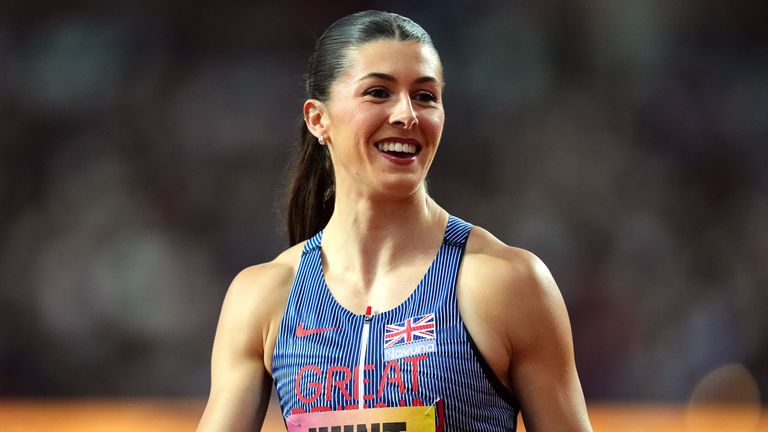
British sprinter Amy Hunt delivered that message moments after finishing fourth in the women’s 200m at the World Athletics Ultimate Championship in Budapest. Her words were directed at an advert that had already gone viral: Sydney Sweeney’s controversial campaign for sports prediction company Novig and Hunt’s response captured the frustration at the heart of the backlash.
For women in sport, the ambition is not to turn people away from the spotlight. Quite the opposite: female athletes and organisations have spent years fighting for bigger audiences, greater investment and the same level of attention and respect routinely given to men’s sport. But alongside that push for visibility is a desire to be recognised as athletes first, for the training, physical strength, discipline, sacrifice and performances that make elite sport possible, rather than having their appearance become the main attraction.
In Novig’s advert, Sweeney appears with her body partially covered by footballs, basketballs and other sporting equipment. She repeatedly talks about “sports” before appearing topless on a pool table and telling viewers:
“You can’t trade this, I just look good here.”
The commercial has attracted millions of views and generated a furious response from female athletes who argue that the imagery reinforces precisely the kind of sexualised representation women in sport have spent years challenging.
Hunt was among the first prominent athletes to respond publicly. Speaking after her 200m final, she pointed to the winning time of Melissa Jefferson-Wooden, 21.47 seconds, one of the fastest times ever recorded over the distance and contrasted the physical reality of elite athletics with the imagery of the advert.
“21.4. Muscles. Hard work, sweat, blood, tears,” Hunt said.
Then she explained something that rarely makes it into glossy sports advertising.
“When you’re a woman in sport, it’s not pretty. It’s not glamorous. It’s not sexy all the time, definitely.”
Hunt also spoke candidly about competing while dealing with her period, saying hers had started the day before the championship. It was a striking reminder that elite sport is not an Instagram photoshoot. It is often uncomfortable, exhausting and physically demanding. It can involve injury, disappointment, bodily functions that cannot simply be switched off and years of work for a performance that may last less than a minute.
That is why the reaction to the Sweeney campaign has resonated beyond one advert. Four-time Olympic swimming champion Ariarne Titmus was among those to express her anger, arguing that the campaign was disrespectful to women who had dedicated their lives to their sport.
“How do we live in a world where monetising a woman’s body and sexualising women’s sport is still a thing?” she wrote.
Her comments echoed Hunt’s argument: that there is a difference between celebrating women who are attractive, feminine or confident and using female sexuality as the central selling point for sport.
Australian boxer Skye Nicolson made that distinction explicitly, writing that there is a
“big difference between looking ‘sexy’ because you do sport compared to using sex to sell ‘sport’”.
That distinction matters. Female athletes are not arguing that women should not be allowed to embrace their sexuality. Nor is the criticism necessarily about nudity itself. Athletes have posed nude for magazines and campaigns for decades, including some of the most celebrated women in sport.
The question is context. What is being sold? Who is being represented? And what does the imagery suggest women are worth in relation to sport?
That appears to be why the backlash has produced an unusual sense of unity among female athletes. Rather than simply criticising Sweeney individually, athletes began posting images and videos of themselves competing.
American gymnast Gracie Kramer shared footage of herself performing, alongside the message:
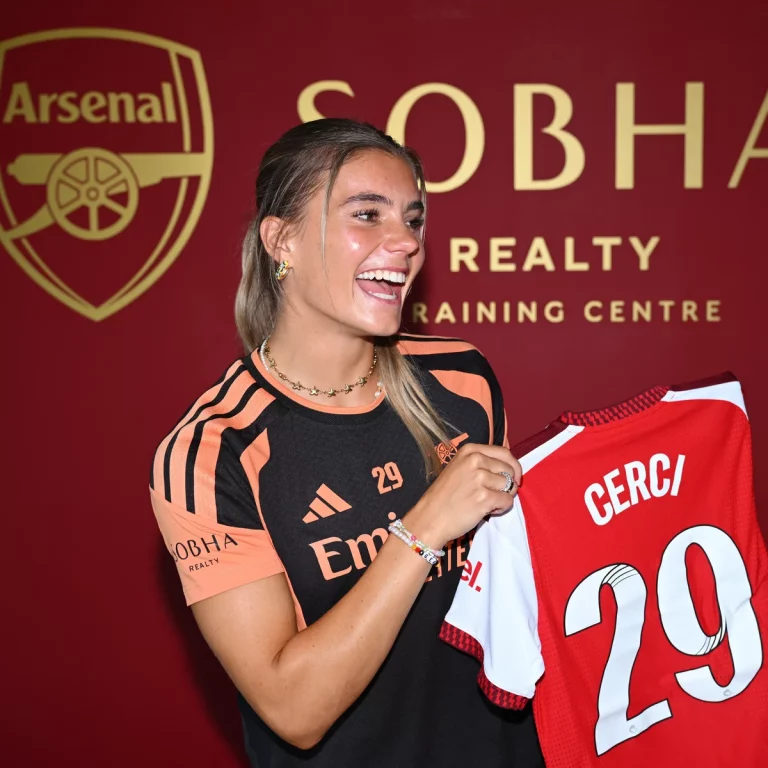
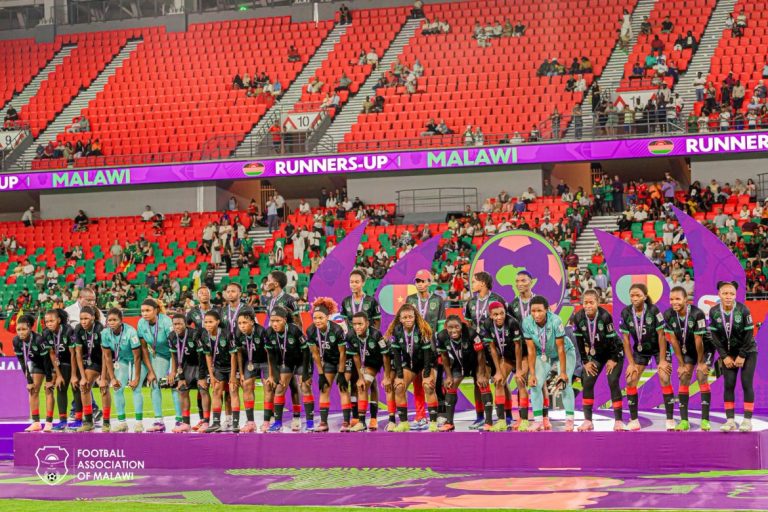
“This is what a woman in sports looks like.”
The post received more than a million likes. Other athletes followed. The response effectively turned the controversy into a celebration of women actually doing sport; sprinting, swimming, boxing, gymnastics, cycling and competing at the highest level. That collective response is significant because women’s sport has changed dramatically in recent years. Female athletes are increasingly drawing huge audiences, attracting major sponsorships and building substantial platforms of their own. Women’s leagues and competitions have become increasingly commercially valuable, while athletes themselves have more power to communicate directly with fans.
Yet the old ways of presenting female athletes have not disappeared. Women can be simultaneously celebrated as elite competitors and scrutinised for their appearance. Their bodies can be treated as evidence of strength and athleticism in one context, then as objects of sexual appeal in another. That contradiction sits at the centre of this controversy. Sweeney herself has appeared to respond to the criticism by sharing photographs of famous athletes who have posed nude, including Serena Williams, Sue Bird, Megan Rapinoe and Ronda Rousey.
The implication appears to be that nudity and athleticism are not inherently incompatible and that is true. But the athletes criticising the Novig advert are making a different argument: the issue is not simply whether women in sport can be sexualised, but why their sexuality is being used to sell a sports product in the first place.
Novig chief executive Jacob Fortinsky has defended the campaign, saying Sweeney helped develop its message and that the advert was intended to attract attention and put the focus on sport. The company also points out that its service is restricted to adults.
Sweeney has similarly described the campaign as a playful attempt to put the focus on sport. Those explanations, however, have not changed the response from many athletes and perhaps that is because the advert has touched a much older nerve.
Women in sport have spent decades trying to establish that their achievements deserve attention on their own terms. The sprinter who spends years developing explosive power should be recognised for the performance that produces a 21-second 200m. The swimmer should be recognised for the thousands of hours spent training. The gymnast for the strength, precision and courage required to perform a routine. The boxer for the discipline and physical resilience required to step into the ring.
None of that means female athletes cannot also be glamorous, attractive, feminine or sexual. But the athletes responding to Sweeney’s advert are asking whether those qualities should once again become the lens through which women in sport are primarily marketed and that is perhaps the most important message to emerge from the controversy. The backlash has not simply been a collection of athletes attacking a celebrity. It has become a collective statement about what these women believe sport represents.
Muscles. Hard work. Blood. Sweat. Tears. Teamwork. Friendship. Dedication. Excellence. Unity. Hunt put it most simply.
“This is what women in sport look like.”