The road to a World Cup is one of the most exciting times to be a football fan. Travel plans are made and dreams of glory come to the forefront. An underdog captures the hearts while players solidify their statuses as heroes and legends. There is nothing quite like it. With the recent schedule announcement for the 2027 Women’s World Cup in Brazil, the tournament becomes visible on the horizon.
However, there are off the pitch issues that have diluted the anticipation of the upcoming tournament. FIFA president Gianni Infantino had planned to sell stakes in the World Cup to private investors and has sent shockwaves throughout the footballing world. The move was widely condemned as a cash grab and has led to organisations such as UEFA considering boycotting FIFA tournaments, including the Women’s World Cup. FIFA eventually backtracked on the proposal but the leadership crisis at the top of the organisation remains. Any trust in the organisation has eroded.
As usual, it is the players and fans that bear the brunt of the misjudgment. The two key stakeholders of the game would lose out to no fault of their own. The controversy is felt even more keenly for women’s football with the sport entering a crucial period of development. Any sort of boycott could be catastrophic for the progression of the sport. Despite its steady growth in recent years, women’s football is still far from stable. The reaction from organising bodies to the plan is heartening, however if the opportunity arose for FIFA to do something similar, you would not put it past them to try again.
On the pitch however, the tournament has the opportunity to be one of the most competitive in years. For the hosts Brazil, hosting the tournament could push women’s football into the national consciousness. For a country that lives and breathes football, it has shown little regard for women’s football.
The sport was banned in the country until 1979 and it took until 2013 for the Brasileirão Feminino to be established. For a country that has produced Marta and has football so deeply embedded in its national culture, it is staggering how women’s football has been disregarded. Equal pay for both national teams has only been in place since 2020 and entrenched gender stereotypes within the country have made it difficult for players to thrive. Could this be the tournament that finally allows the sport to take its deserved place at the forefront? The tournament’s legacy should be increased visibility for its professional players and grassroots support for children dreaming of becoming the next Marta. The tournament can truly be deemed a success if that is its consequence.
For the 2023 runners up England, the tournament comes at a crossroads for Sarina Wiegman’s team. At the time of writing, the Lionesses have yet to qualify and will need the playoffs if they are to reach the tournament. Since the European Championship victory in 2025, England’s performances have been up and down, despite results for the most part being adequate. The low point however, was the 4-0 defeat against Spain in the World Cup qualifiers.
Since Wiegman became manager in 2021, the squad has more or less stayed the same, with the England manager renowned for sticking to a core group of players. This could be the last tournament for players such as Lucy Bronze so it is critical that England are looking to the future. With the World Cup missing from both England’s and Wiegman’s trophy cabinet, it would be fitting that the World Cup in Brazil could be the swansong of one of the greatest international squads in history. With Wiegman’s record in tournaments, it would be unwise to write off England just yet.
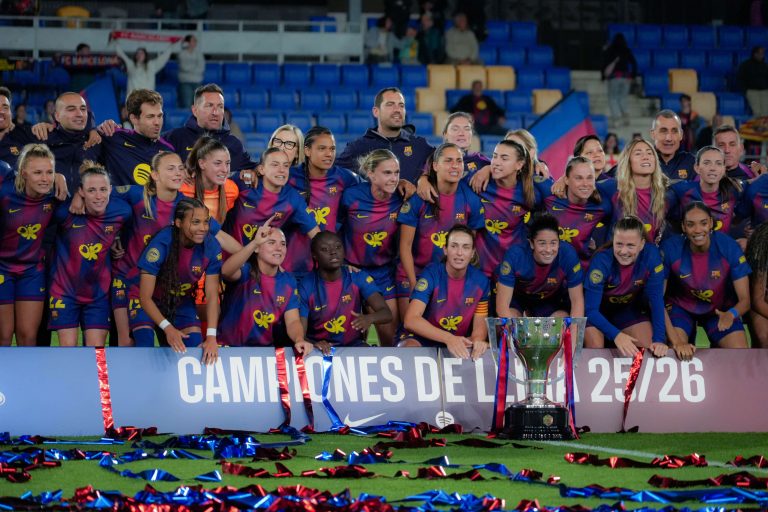
However, it would be hard to look past current holders Spain going back to back in South America. The currently number one ranked side in the world look imperious. Since the appointment of coach Sonia Bermúdez in August 2025, La Roja have lost just once. It seems redundant to bring up the talent they have at their disposal but Spain are feared for a good reason. With Ballon d’or winners Alexia Putellas and Aitana Bonmatí the two standouts in a deep squad, Spain have riches many other countries could only dream of.
Outside of the usual suspects, Edna Imade has made a big impression since her debut in November, scoring five goals in six appearances. With the players Spain already have, plus new talent ready to take their next steps, Spain are on the precipice of a footballing dynasty. Another World Cup under their belts will make that a reality.
Alongside Spain, the United States should be in the conversation as favourites for the trophy. Since their disappointing exit at the 2023 World Cup, manager Emma Hayes has used the following three years to rebuild the squad with exciting talent. Players such as Trinity Rodman, Alyssa Thompson and Sophia Wilson have established themselves as top tier players whilst up and comers such as Lily Yohannes will be national team stalwarts for years to come.
Hayes’ first World Cup as US manager will be one of the more interesting talking points heading into the tournament. Her success at Chelsea was seemingly endless and she is one of the best managers in the world. International football, however, requires a different skill set to bring glory. As Wiegman and England have proved, being a tournament manager is a specific proficiency. Hayes’ success has come in league football where she was in constant contact with her players. She will not have that luxury during the World Cup. Winning gold at the 2024 Olympics in Paris could be a preview of what is yet to come and that she can be a successful tournament manager, but translating that into more will be the crucial challenge.
It is not just the potential winners that deserve a spotlight. Malawi and Algeria will both be making their debuts at the tournament. The 2026 Women’s African Cup of Nations acted as qualification for the tournament, with all semi-finalists of the WAFCON qualifying for the World Cup. Algeria defeated Ivory Coast 2-1 whilst 153rd ranked Malawi stunned Ghana to secure their place in next year’s tournament. One of the most exciting parts of any World Cup is seeing new teams.
Malawi boast Temwa and Tabitha Chaŵinga, two of the most exciting forwards in the game. To see them shine on the world stage is a thrilling prospect for all fans. On the other hand, top scorer and record appearance holder, Naïma Bouhani, will get to play for her side at its first World Cup at the age of 41. Bouhani made her international debut in 2002.
The overarching theme of the upcoming World Cup is crossroads. Whether it is the host nation finally getting the attention they deserve, the last hurrah for a generation of players, or new beginnings. Whatever happens, it is shaping up to be the most fascinating tournaments in a generation. Its potential outcomes however, are even more fascinating for the future of the sport. Rather than considering who will win the World Cup, what will the World Cup change deserves greater thought.